
· International acquisitions · cityboat
Lange's International Acquisitions
and Brand Development
From Anta's acquisition of Amer to
the respective roles of Lange Medtech® and asap®
 --views
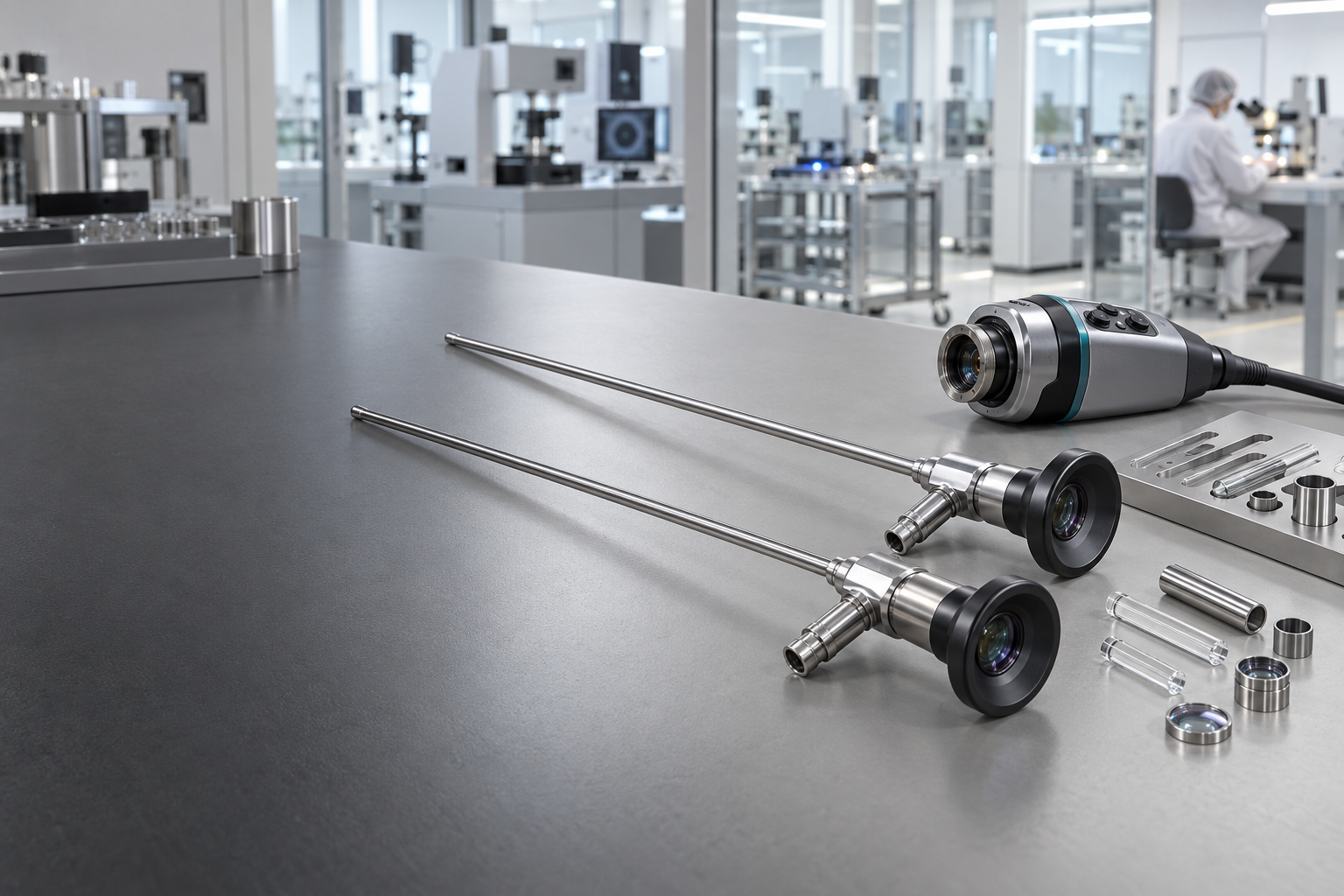
SI creation: Optics and precision manufacturing
After reading the report on acquisitions of European and American consumer brands in issue 19 of Caijing in 2026, I returned to the case of Anta's acquisition of Amer Sports. I have long thought it worth studying, and the National Day holiday offers a chance to think it through and write something down. What actually happens between signing a deal and running the acquired company well? For Lange, the value of learning from Anta lies in understanding what we can add to an overseas business, and how much funding, how many people and how much time those changes will require.
My current idea is for Lange Medtech® to build a complete solution for spinal endoscopic surgery, then extend into sports medicine in measured steps; asap® should continue developing in other fields as a specialist global supplier of optical endoscopy OEM and ODM services. They would share technology and manufacturing capabilities where permitted, while each remains accountable for its own customers, products and operating results. This is still a concept that needs refinement using internal data and discussion with the teams. The current wave of consumer-brand acquisitions has its own timing. The report notes that some private equity funds need exits, some established brands are seeking new markets, and Chinese buyers' retail and supply-chain experience is receiving greater recognition. Willing sellers create opportunities for buyers to recombine resources. But greater willingness to sell does not mean an asset is cheap, or that growth will follow the arrival of Chinese shareholders. The longer a brand's history, the more carefully we need to distinguish what today's customers are still willing to pay for.
Anta's acquisitions and operations
The Anta and Amer story needs to begin earlier, with FILA. In 2009, Anta acquired equity in companies holding FILA brand rights and operations in mainland China, Hong Kong and Macau. This was a business with clear territorial boundaries, not an acquisition of FILA's global company. One detail matters: the initial announcement still envisaged distributors taking over mainland stores. The retail model that later emerged was not treated as a ready-made answer. Anta, too, gradually learned through operating how to develop another brand. By 2019, FILA contributed RMB 14.77 billion in revenue to Anta. That year's disclosures paid close attention to each brand's products and pricing, store efficiency, sales data and replenishment. To me, the value of that decade was that before taking on a larger acquisition, Anta had practised organising products and retail for customers different from those of its main brand, and had developed the people to do it. FILA's success could not simply be copied worldwide, but it gave Anta an operating foundation tested in practice.
At the end of 2018, an Anta-led consortium proposed acquiring Amer. Participants included FountainVest Partners, Chip Wilson's investment company Anamered and Tencent. The offer of EUR 40 per share valued all outstanding equity at about EUR 4.6 billion, a substantial premium to the share price before the initial acquisition interest became public. The deal closed in 2019, with Anta holding roughly 58% in the acquisition structure at that time. This was a major transaction undertaken jointly by a consortium. EUR 4.6 billion should not be described as equity paid by Anta alone, nor confused with enterprise value including debt.
Anta already had a substantial base: revenue of about RMB 24.1 billion and net profit of about RMB 4.1 billion in 2018. Amer owned a group of strong specialist sports brands, but Anta's assessment at its 2019 investor day was that the business relied heavily on wholesale, individual brands remained relatively small, and China contributed little. That gave both sides a reason to work together. Anta saw the possibility of taking specialist products and brand reputations into larger markets. Paying a premium meant it also needed the ability to deliver operating improvements that had not yet been achieved. Another background detail is easily overlooked: Amer itself was a group built through acquisitions. Wilson, Atomic and, later, Salomon and Arc'teryx each had their own histories and areas of expertise. Anta took over an already assembled international brand group and needed to reassess which capabilities to preserve and which operating practices to change. Buying a portfolio does not mean every business in it deserves the same amount of resources.
One important change after the acquisition was to organise operations more directly around the brands. Amer later described this as a decentralised brand-direct model. As I understand it, Arc'teryx, Salomon and Wilson have different users and product logics, so people who understand each brand need fuller operating responsibility. Consumers trust Arc'teryx because of product performance in demanding outdoor environments. If expansion becomes only about prices and store counts, the value originally acquired may be damaged. Another change was the development of directly operated stores and e-commerce, or DTC. Amer reported that DTC rose from 22% of revenue in 2020 to around 36% in 2023. This transformation changes both the information a company holds and the responsibilities it carries: it is closer to consumers, but must handle locations, staff, stock, returns and sell-through itself. Removing a wholesale layer introduces retail expenses. Whether higher gross margins become better profits and cash flow still depends on how stores and inventory are managed.
The product mix has also changed. Amer's strategy today still emphasises growing footwear and apparel while retaining its strength in specialist equipment. My reading is that equipment establishes credibility, while footwear and apparel can enter more people's daily lives. Salomon's growth, for instance, cannot be understood solely through the logic of ski equipment. But specialist credibility and mass appeal need balance. If consumers feel a brand has abandoned its original product standards, expanding sales may consume long-term value. Resource reallocation also includes exits. Amer sold Precor in 2021 and Suunto in 2022. For an acquirer, this is a practical reminder: the asset list at closing need not define the business forever. Continuing to own a business requires it to contribute to future returns. Having paid for it in the past is not a sufficient reason to invest more today.
Today's results can make it easy to underestimate the difficulty along the way. In 2023, Amer generated operating profit of about USD 303 million, yet still reported a net loss of about USD 209 million and finance costs of about USD 413 million. Operational improvement and pressure from the capital structure can coexist. The treatment of shareholder loans and refinancing of third-party debt around the 2024 IPO were also part of the transformation. Looking only at adjusted profits or brand prominence misses how long shareholders may need to carry funding pressure. Amer returned to the capital markets with a New York listing in February 2024. By 2025, revenue reached USD 6.566 billion and net profit attributable to the company's equity holders was about USD 427 million. Calculated from its disclosures, DTC represented about 48.9% of revenue and Greater China about 28.4%. These figures show that the operating structure changed. They also remind me that while China contributes substantially, most revenue still comes from other regions. The case cannot be reduced to bringing foreign brands into China to sell them.
At the time of writing, the latest disclosed results for the second quarter of 2026 still showed revenue growth of about 32%, with double-digit growth across all regions and business segments. But that quarter's margins also benefited from tariff refunds, so not every reported improvement can be attributed to recurring operating capability. A listing and a rising market value offer one window on the outcome. Assessing acquisition returns still requires all capital contributions, subsequent financing, ownership dilution and cash distributions; today's market capitalisation cannot simply be divided by the original purchase price. I am particularly reluctant to present this experience as proof that any one Chinese management approach must succeed. The brands' pre-existing product expertise, management teams' work and changes in market demand all contributed. Anta's and other shareholders' contributions should be assessed in that context. The original acquisition announcement proposed an independent board and operating autonomy while making clear that shareholders would provide strategy and resources. It reminds me that respect for existing teams needs clear responsibilities, budgets and operating results alongside it.
Caijing also described the difficulties Shandong Ruyi encountered after a series of overseas acquisitions and under debt pressure. Placing the two cases side by side is more instructive than looking at Anta alone. If a company can sustain investment after one acquisition only through the next financing round or IPO, integration may be forced to stop when capital markets turn. Calling oneself an industrial buyer before investing is not enough. Whether the industrial rationale can be delivered depends on having people capable of running the business for the long term after closing, and enough cash to complete the plan.
Lange's acquisition logic and accumulated expertise
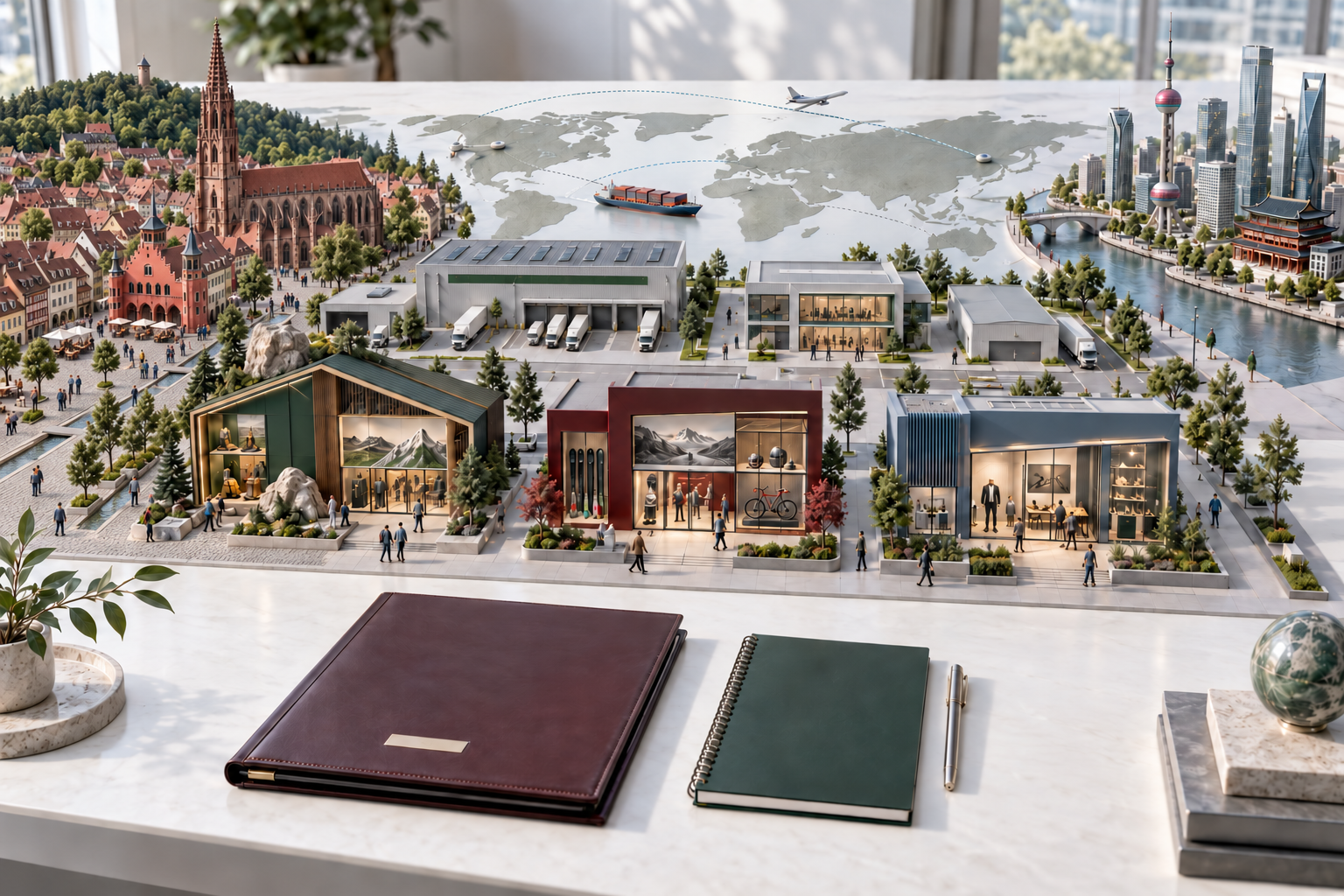
Looking back at Lange, we do share something with Anta: the ambition to connect expertise built up over years in overseas companies with markets, customer needs and supply chains closer to us. But when Lange began international acquisitions, our domestic market share, financial strength and operating systems were all still being built. Anta had a sizeable business behind it and a consortium alongside it; we have had to build our own organisation while integrating overseas companies. That difficulty must be acknowledged, not passed over merely because the direction makes sense. Nor do I think a company must wait until its domestic market share is high enough before it is entitled to make an international acquisition. Technology and teams do not always become available when we are fully ready. The more practical question is whether, despite incomplete preparation, we possess a few specific capabilities that can improve the target's position, and can afford the cost of testing that judgement. For Lange, these capabilities must translate into concrete clinical problems, deliverable product projects and customer collaboration, not simply the claim that 'the Chinese market is large'.
I have said that Lange took a somewhat clever route in selecting its targets: choosing specialist OEM/ODM businesses to acquire technology, manufacturing and customer-development capabilities first. This better matched our professional background and existing resources. Buying an end-user brand directly also requires continuing investment in branding, channels and market education; in medical devices, registration, clinical adoption and after-sales systems come into play too. Specialist businesses serving mainly B2B customers gave us a chance to create value first in a more familiar area. There is a price to that choice. Brands can earn a premium through consumer recognition; the value of an OEM/ODM business depends more on why customers keep entrusting it with development and production. Stable processes, co-development experience and customer validation can support lasting relationships, but concentration in major customers, pricing pressure and replacement by new platforms can weaken returns. Having taken on less of the complexity of consumer-brand operations at acquisition, we need to be especially strong in technology, quality and customer relationships. Developing our own medical brand later still requires a separate clinical-support, channel and service capability.
That is why Lange cannot copy Anta simply by 'increasing the direct-sales share'. For asap®, the trust of existing OEM customers is itself an asset to protect. If customers fear their design materials and project results may be used by a competing business within the group, arrangements described as synergies could instead cost orders. Collaboration should begin with customer authorisation, intellectual-property boundaries and clearly defined joint projects. The two types of acquisition also face different questions of time. Consumer brands often need their accumulated culture and specialist reputation to remain intelligible to new generations of consumers. Medical technology also faces changes in performance, cost and product architecture. Whether experience with rigid optical endoscopes can be carried into electronic, miniaturised and fluorescence-imaging products needs to be tested case by case. Acquisitions gave us the conditions for building a 'complete spinal endoscopy solution' in China's domestic market. Completing those products still requires further investment in development, validation, registration and volume production. That funding belongs in the initial assessment alongside the purchase price.
This is why I keep asking what asap®'s know-how actually consists of. We need to know which knowledge can be captured in design and process documents, which depends on engineers' experience and judgement, and which capabilities are still missing. Only when these are clear can Anta's example of bringing accumulated expertise into larger markets become executable work at Lange.
Understanding asap®'s value begins with how a rigid optical endoscope is made. The company has operated since 1998. Its early public FDA submissions already described a compact objective, a rod-lens image-relay system and illumination fibres arranged between inner and outer metal tubes. Its current public range includes rigid endoscopes with and without working channels, semiflexible endoscopes and adapters, serving joint, urological, gynaecological and other applications, with services from development to series production. These materials show the direction of its accumulated expertise. Whether particular products lead in performance still needs testing and customer-use data.
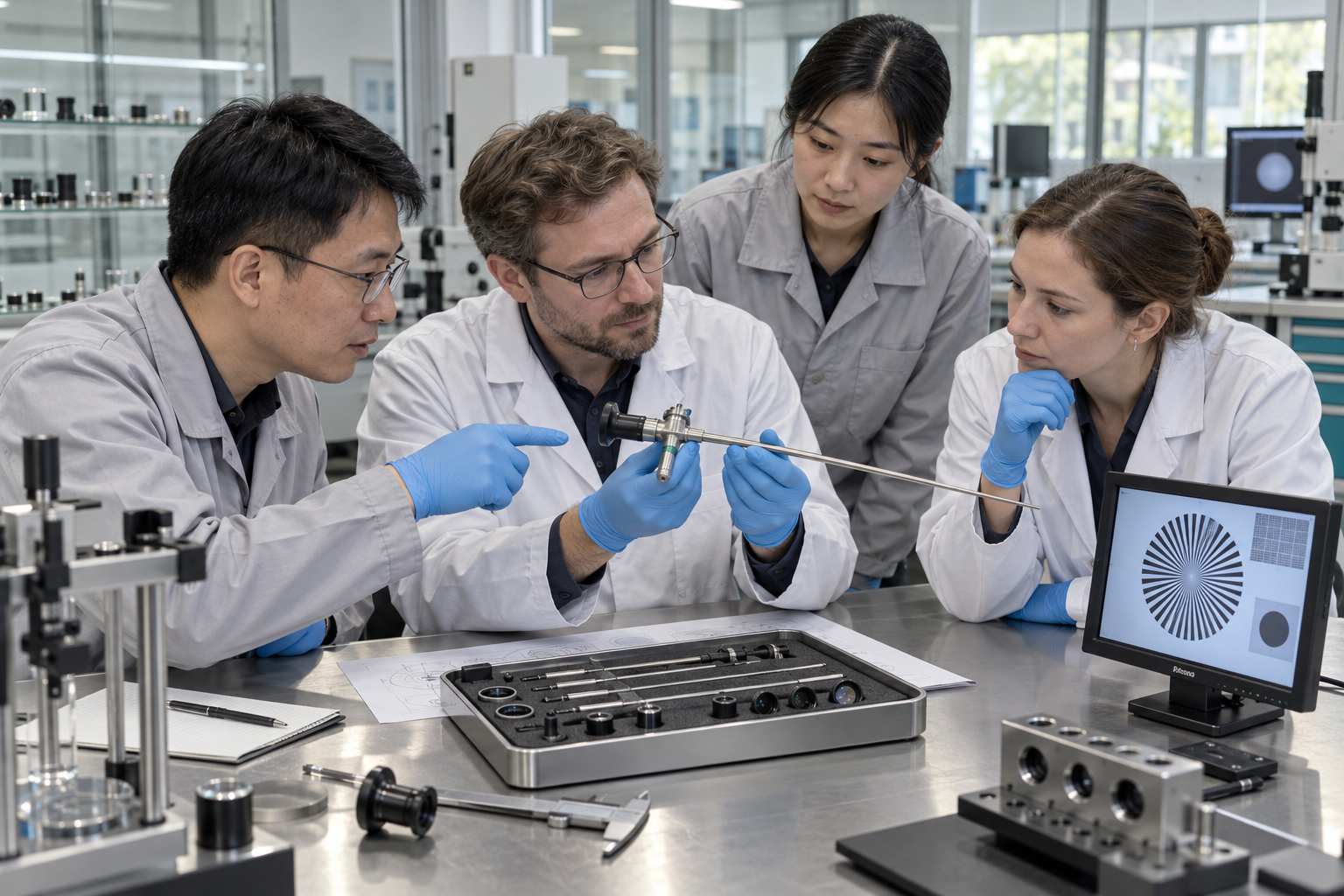
As I see it, the know-how worth preserving and deepening at asap® is the experience of combining optical design, precision structures and manufacturing processes. Within a limited shaft diameter, the objective, image relay, illumination and working channel compete for space. Brightness, clarity, field of view, depth of field and distortion involve trade-offs; improving one measure cannot be separated from the overall conditions of use. Reusable endoscopes also have durability requirements. Assembly precision, sealing, material compatibility and joining processes must withstand specified cleaning, sterilisation and use. A prototype that produces a good image and a series-produced device that consistently produces good images throughout its service life represent two different levels of capability. We need to turn experience gradually into clear inspection methods, process windows and training material.
I would therefore assess this expertise against practical measures: consistency between products, detection of supplier variation, traceability of repair causes, succession in key roles, and whether custom projects enter volume production on time. I am particularly concerned with quantifying tests of brightness uniformity, ghosting and chromatic aberration, and ensuring critical incoming materials and stock support reliable delivery. These operating results are what give technical experience sustainable commercial value. Experience in rigid optical endoscopes does not automatically mean mastery of miniature CMOS modules, image-processing software or complete fluorescence systems. Those capabilities need to be assessed and built individually. We can also explore creative ideas by combining complementary German and Chinese technical strengths and resources within the group.
Industrial change in China and Germany, and acquisition examples
To understand asap®, we also need to consider the medical-device network in southwestern Germany. Tuttlingen and its surroundings have a dense concentration of medical-technology companies. City materials describe a cluster of more than 400 such businesses, encompassing instruments, equipment and implants, not 400 endoscope companies. KARL STORZ, Aesculap and many specialist suppliers are important parts of this environment. Geographically, asap® is in Umkirch near Freiburg, not in Tuttlingen itself. SCHÖLLY, also in southwestern Germany, is in Denzlingen, while Richard Wolf is in Knittlingen. I prefer to describe Tuttlingen as an important node within the wider technical and industrial network of southwestern Germany, rather than blur different locations and capabilities together.
I value this environment because precision manufacturing often depends on many specialist activities working together. Companies can find partners in optics, machining, assembly, testing and medical-device development; industry organisations also provide ongoing training and compliance collaboration. Bringing people familiar with similar problems close together helps experience and cooperation circulate. But acquiring one company does not automatically grant access to the whole cluster. Supplier relationships, talent and technical partnerships all need sustained cultivation. Today that accumulated expertise is being tested anew. European SMEs face continuing compliance investment, and businesses with many low-volume products in particular need to reassess their economics. A 2025 survey by BVMed, MedicalMountains and other organisations covered 245 manufacturers; 53% of respondents reported reducing development projects because of MDR and IVDR. These are company self-reports within an industry survey, not a direct description of every endoscope company. Nevertheless, they are a clear reminder of the competition for development and compliance resources.
I also worry that low-volume, high-variety production dependent on hands-on experience may make lead times, costs and succession lasting constraints. A cluster can offer specialist division of labour, but it cannot automatically solve each company's organisational efficiency. Smaller manufacturers can easily spread their resources too thin by maintaining many traditional models while independently developing electronics and software platforms. Another pressure comes from changing technologies and product systems. Mindray already offers 4K fluorescence imaging products, and Germany's SCHÖLLY has invested in chip-on-tip technology, image algorithms and near-infrared fluorescence systems. Competitors are developing optical, electronic and software capabilities in parallel. The historical reputation of 'Made in Germany' alone increasingly struggles to justify a sustained price premium. We need to explain the performance, reliability and service a product actually delivers.
To understand changes among German companies, we also need to consider Chinese peers. China's endoscopy industry now has distinct layers: businesses developing flexible gastrointestinal and respiratory endoscopy systems, suppliers of surgical imaging platforms, and optical and endoscope manufacturers deeply integrated into international supply chains. SonoScape launched the HD-650 platform and began volume production in 2025; NovelBeam's range includes 4K fluorescence endoscopes and optical components. Treating China uniformly as low-cost manufacturing and Germany uniformly as high-end technology is no longer a sufficient basis for acquisition decisions. I see an important Chinese advantage in proximity to clinical needs and access to substantial electronics, software, precision-machining and supporting instrument resources. Aohua's annual report also emphasises interdisciplinary cooperation and sustained clinical refinement in endoscope development. This environment supports repeated product revisions, better surgical coordination and cost control. Realising that advantage depends on effective collaboration between clinicians and engineers and on validation processes. Frequent clinical contact does not automatically mean sufficient evidence.
Another advantage is the emergence of capable companies in both complete systems and specialist components. Chinese manufacturers can supply control units and image processing as well as contribute to endoscope, light-source and precision-optics development. NovelBeam's cooperation with Stryker shows that Chinese manufacturers can enter leading global companies' supply chains. After acquiring German businesses, Lange still competes with these Chinese peers. A country-of-origin premium alone is unlikely to provide a lasting position. The industry's weaknesses in China also need to be considered at different levels. Smaller businesses often struggle to support a complete control-unit platform, software iterations, registration in multiple markets and overseas service simultaneously. Reliable supply of high-performance components, consistent volume production from prototypes, and maintained performance after repeated cleaning and sterilisation all need product-specific validation. I believe the next phase of competition will focus more on long-term reliability, system coordination and continuing service. Companies with an installed base and established training and repair systems will still present significant barriers to new entrants.
OEM business has another vulnerability. In 2025, NovelBeam's largest customer accounted for 67.58% of sales. Entering an excellent customer's supply chain can bring scale, but also concentrated dependence. That figure belongs to one company and is not an industry average. Still, it reminds Lange to look beyond order growth to customers' inventory cycles, alternative-supplier strategies and next-generation platform choices. Even without technical failure on our side, changes to a customer's products can affect our orders. China's opportunity therefore cannot be understood only as import substitution, nor can a German company's value be reduced to adding an overseas label to a Chinese product. A more meaningful opportunity for Lange is to find needs that existing supply does not fully serve: customers who require specialist endoscopes and reliable documentation, but do not necessarily want to build a complete optical development organisation themselves. We need to show that a multinational organisation can do this better than in-house development or ordinary purchasing.
Erbe's acquisition of BMT offers a concrete reference. In 2022, Erbe acquired a majority stake in Blazejewski MEDI-TECH. The previous shareholder, SHS, exited, while the founder retained a minority stake and continued in management at that time. Based in Sexau near Freiburg, BMT has expertise in rod lenses, chip-on-tip technology and 2D and 3D imaging. Erbe's announcement emphasised combining imaging with electrosurgical treatment and explicitly committed to further investment in the existing rod-lens OEM customer business. This was an industrial acquisition between German companies, not a case of a Chinese company expanding overseas.
At the time of this review, BMT's website described bringing the relevant specialist teams together at the Erbe Vision imaging centre in Sexau. What I find useful is the clear direction for combining products while continuing to value external OEM customers. Lange can study how imaging works together with spinal and joint surgical instruments. Hangzhou Demed, due to join the Lange Medtech group in October 2026, will be an active attempt in that direction. We need to begin with an inventory of each side's technologies and investment plans. Aohua's German acquisition was WISAP. A subsidiary acquired 100% of WISAP in 2018. WISAP supplies rigid endoscopes and gynaecological equipment, with a portfolio also covering irrigation, insufflation and minimally invasive instruments. Aohua, primarily focused on flexible electronic endoscopes, thereby gained different product capabilities and an overseas operating base. The example suggests that rigid endoscopes can create value as part of a surgical product set, not only as standalone scopes. Financial outcomes after acquisition, however, still need to be assessed using the acquired business's operating data.
Nanos Medical's acquisition of endo doctor adds repair and service to the picture. Nanos Medical announced the acquisition at the end of 2021 under its then Chinese name, Lainuo Medical; subsequent company materials place the wholly owned acquisition in 2022. Its plan at the time was to retain the German team, pursue product registration in China, and use relevant core components in locally developed imaging systems. endo doctor operates its own product business, OEM development and manufacturing, and multi-brand repairs. It cannot be classified simply as a contract manufacturer.
Repair capability is particularly worth studying for Lange. It can help explain why products fail in actual use and inform backup units, turnaround and service-life management. But repair services need clear authorisation, quality processes and boundaries of responsibility. We should first improve repair analysis for our own and authorised products, then decide whether to expand. endo doctor's website also describes cooperation on technical documentation with OEM and private-label customers. Customers buying specialist endoscopes need documents that support their own product responsibilities too. All three cases add capabilities adjacent to an existing business, but in different combinations: Erbe links imaging and treatment, Aohua broadens its product portfolio, and Nanos Medical connects specialist products, German development and repair services. Announcements alone do not allow me to conclude that all achieved ideal returns. They do let me ask Lange more precisely: which businesses do we want to connect, who will buy, and why would customers choose us?
Optical, electronic and single-use pathways
This brings me back to a recurring question: will electronic endoscopes replace optical endoscopes? First, the concepts need separating. Traditional rigid optical endoscopes mainly transmit an image to the proximal end through structures such as rod lenses, where a camera captures it. Chip-on-tip endoscopes place a sensor at the distal end and transmit the image as an electrical signal. Electronic endoscopes still need an optical objective, and traditional rigid optical endoscopes can connect to digital camera systems. Whether illumination uses optical fibres or LEDs is yet another design choice; the word 'electronic' alone does not answer it.
Similarly, optical or electronic describes the imaging architecture; reusable or single-use describes how a product is used; rigid or flexible describes its mechanical form. These dimensions can be combined in different ways. ICG is an imaging function that can be combined with different endoscopes and usage models. Collapsing these dimensions into a simple story of 'new technology replacing old' can easily send product strategy in the wrong direction.
Traditional rigid optical endoscopes still suit procedures that require stable imaging, a choice of viewing angles and effective use of repeated reprocessing cycles. KARL STORZ's HOPKINS Rubina products combine optical scopes with 4K and near-infrared fluorescence systems, showing that optics remains part of next-generation imaging. At the same time, whether a '4K endoscope' ultimately produces enough detail depends on the combined performance of the scope, adapter, camera and display. Output pixel count alone is not a substitute for image-quality assessment. Over the past three years, asap® has introduced excellent ICG 10.0 optical-scope solutions to customers and has actively explored development and volume production of ICG 5.5 optical scopes. Its current challenge is not entirely one of development, but increasingly one of finding the right customers in an intensely competitive ICG market.
Chip-on-tip endoscopes offer new options for miniaturisation, flexibility and single-use design, but bring challenges in sensors, cabling, heat dissipation, waterproofing, software tuning and supply chains. I expect both approaches to coexist for a long time across different clinical settings. asap® needs to decide which optical experience transfers, which areas require partners, and which products truly merit redesign. As for single-use endoscopes, I see them more as a parallel development path alongside reusable scopes than as a universal upgrade or replacement. In future, Lange Medtech® could extend its spinal solutions to sets comprising single-use scopes, access tools, surgical instruments and consumables for tasks such as tissue treatment, used with suitable imaging, power and energy equipment. Whether such configurations should be adopted needs validation of clinical performance, turnaround and cost per procedure. The specific technologies and business models are topics for another article.
Product direction, starting with the spine
Applying these judgements to Lange, I would start with spinal endoscopy. Single-portal spinal endoscopes must coordinate imaging, the instrument channel and irrigation within a limited outer diameter. Biportal techniques separate viewing and working channels, creating another set of requirements for scopes, instruments and fluid management. The two should not simply share the same product assumptions. Complete solutions already exist around imaging, dedicated instruments, fluid management and training; RIWOspine is one example. In my view, the spine should be the first area in which the Lange Medtech® brand develops depth. We want to connect not only scopes and instruments, but also imaging, power systems, energy platforms such as radiofrequency, and fluid management. Single-portal and biportal approaches need separate product requirements. Clarity, instrument access, irrigation and energy use must be validated together throughout the procedure. The brand should give doctors and hospitals more complete support in selection, use and maintenance.
Arthroscopy and related sports-medicine business can follow in steps once the spinal offering has established a product and service base. Some imaging, power-system and instrument-engineering experience can be shared, but intra-articular work, fluid management, soft-tissue treatment and any later repair products each have their own requirements. I would first choose procedures close to our existing capabilities and confirm whether customers and channels can genuinely carry across. Sharing equipment does not mean an entire specialty business can be copied. Urological endoscopy also needs distinctions between rigid cystoscopes, semirigid ureteroscopes and flexible ureteroscopes. Flexible control, working channels and irrigation impose different capability thresholds. Within asap®, I would first take on well-defined OEM projects based on our existing optical and structural experience, then assess what additional technology is needed. Being able to make rigid scopes does not mean being able to develop every urological endoscopy system independently.
Gynaecology likewise requires a distinction between hysteroscopy and gynaecological laparoscopy. Small diameters, the transition from examination to appropriate treatment, and coordination between scopes, fluid management and instruments all deserve study. WISAP's portfolio reminds me to define such opportunities around the full procedure. For asap®, serving customers who already have relevant channels and supporting systems is more suitable than entering several end-user brand markets at once. ICG deserves separate study. It uses indocyanine green's near-infrared fluorescence to provide information; what can be visualised depends on the method of use and approved indication. Common areas of research and application include perfusion, biliary and lymphatic visualisation, but each use requires checking the approved scope of both device and dye. It can feature in laparoscopic systems and other suitable surgical imaging systems. For asap®, it is a potential extension of optical capability into new functions, but transmitting near-infrared light is a long way from a complete fluorescence product.
White-light and near-infrared transmission, image consistency, separation of excitation light from fluorescence, camera sensitivity and display processing must be designed and validated together. I would start with clear customer needs, evaluate validated scopes or optical components, and then decide whether to increase system investment. Existing optical expertise provides a foundation, but competitiveness in ICG products must still be established through prototypes, system matching and application validation. Rigid endoscope businesses in abdominal, thoracic and ENT applications can continue to be assessed as a base for reusable products and OEM orders, but every niche needs a customer and profit rationale. Flexible electronic endoscopes for gastrointestinal and respiratory use require more experience in control, channels, software and clinical practice. I favour continued monitoring and collaboration projects we can competently undertake, rather than widening our own-brand front too early simply because a market is large.
Taken together, my basic view for the next few years is that reusable rigid optical endoscopes still have room to develop. Competition will focus more on reliable imaging, system compatibility and service across the full lifecycle, while electronic and multispectral technology adds functions in selected settings. Developments in control units, algorithms, fluid management and surgical instruments will change endoscope suppliers' bargaining position. Lange needs to prove value that is not easily replaced in clearly defined applications, rather than build a complete business around every new technology.
the respective roles of Lange Medtech® and asap®
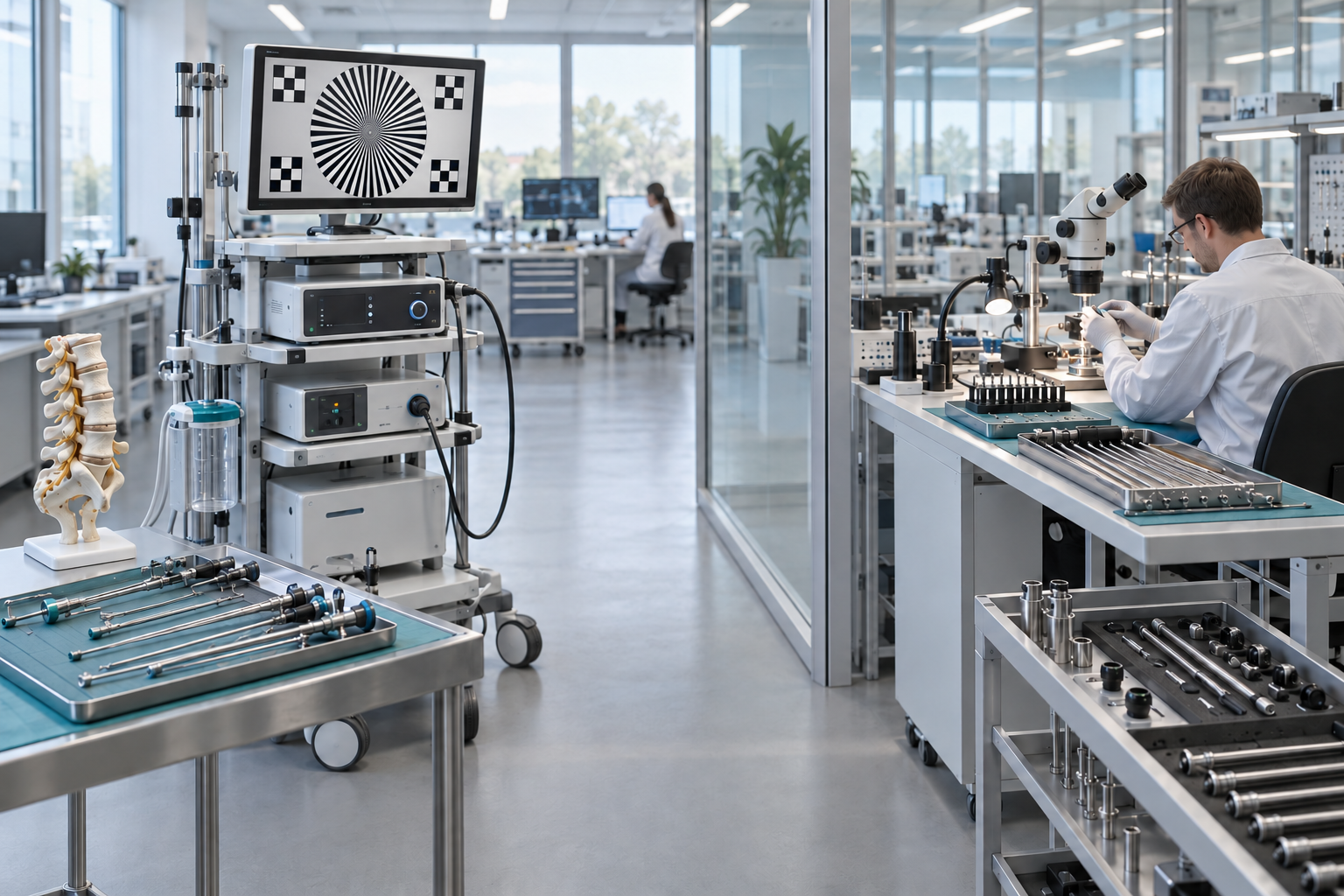
Returning to brands and OEM/ODM, I now prefer to define the two businesses distinctly. Lange Medtech® should own product definition, system integration and branded service for complete spinal endoscopy solutions. asap® should continue serving specialist global customers with optical endoscopes, key components and development and manufacturing services. Acquiring specialist manufacturing capability first can underpin a specialty brand, but the brand business needs its own clinical, channel and service capabilities. Lange Medtech® first needs to deliver a trolley-based solution that works reliably in defined procedures, including endoscopes, cameras and displays, light sources, surgical instruments, power systems, radiofrequency and other energy equipment, irrigation and necessary accessories. The value of a complete solution lies in whether these parts truly work together: smooth instrument passage, imaging that meets procedural needs, validated combinations of power, irrigation and energy, and someone able to resolve failures promptly. Putting several devices on one trolley is not enough.
The brand side must, in my view, master specialty product definition, key endoscope and instrument capabilities, system validation and service organisation. Some imaging, power and radiofrequency-platform capabilities can initially be delivered with suitable partners, with the scope of in-house development decided later according to customer needs and long-term economics. Offering a complete solution requires unified arrangements for configurations, interfaces, training, spare parts and after-sales support. Partner products also require clear product responsibilities, change notifications and ongoing supply conditions. Competition in spine should centre on the practical support hospitals need to perform procedures. Early on, we should select a small number of target hospitals and distributors, define priority procedures, and establish standard and optional configurations with traceable training and service. Continued hospital use, utilisation of each system, repeat purchases of tools and consumables, repair turnaround and collections tell us more about whether a brand is taking hold than trolley sales alone. Expansion into sports medicine should depend on this capability operating reliably.
asap® primarily serves medical-device brands, system manufacturers and specialist partners. In applications beyond spine and sports medicine, we should preserve its position as a specialist, reliable global optical-endoscopy OEM/ODM supplier, serving existing customers and seeking those needing custom development, a second source or support for existing products. Where projects may overlap with the Lange brand, customer agreements and competitive relationships need checking in advance. Group needs must not displace outside customers' production capacity or appropriate their proprietary results. This professional position needs internal capability behind it. Development should gradually establish reusable optical and mechanical designs, clear process windows and succession arrangements for engineers. Quality control should build shared imaging-test methods and track incoming materials, assembly, sterilisation durability and repair causes. Only by turning experience into methods that can be taught, validated and traced can asap® avoid excessive dependence on the personal judgement of a few individuals.
Operational improvement also has to reach daily work: identifying custom scope and engineering costs accurately when quoting, checking materials and capacity before promising delivery, and keeping drawings, inspection and production revisions aligned after design changes. Appropriate digital systems should gradually connect customer requirements, materials, production schedules, batches and service records, fixing information gaps before adding features. The modernisation worth showing customers is a professional response to enquiries, delivery promises kept, and quality issues resolved through to closure. Digital-media promotion should help customers understand these capabilities. asap® could build a professional German-English website with product information searchable by application and capability, development and quality processes, validated performance information and a clear project-enquiry channel. LinkedIn, specialist exhibitions and technical content can work together to bring customers, but exposure should not be the main measure. I want to see qualified project leads, progression to evaluation, conversion from prototypes to orders and development lead times. Customer names, designs and case studies require permission before use.
Lange Medtech® content should be closer to specialist users and channel partners: complete procedural configurations, system operation, training, maintenance support and evidence-based application material. The two brands can share content-production resources and digital tools, but should address different audiences and establish credibility through their own product facts. Ownership of the German subsidiary should be transparent, while project permissions, customer agreements and information management protect asap® customers' interests.
Organisation, cash and long-term operations
Revenue and performance assessment need separating too. For the Lange Medtech® brand, I would assess the overall contribution of the trolley solution and associated products, continued use after installation, repeat purchases of instruments and consumables, and service costs. For asap®, the measures are external customer projects, development fees, series supply, quality and delivery performance, and customer retention. When the group shares general inspection methods, basic compliance work and supply-chain resources, actual costs and benefits should be recorded. Internal purchasing cannot replace external customers' validation of product value. The two businesses each need a leader and budget, alongside a shared technical-review mechanism. Customer designs, background IP, jointly developed results and group-owned results must be distinguished. General capabilities that may be shared should be shared under the relevant authorisations and quality requirements. Own-brand development budgets should receive separate approval, while asap®'s external deliveries and continuing development remain protected. Only then can the brands genuinely support one another.
Organisationally, overseas teams should have the authority needed to solve local problems, while the group must be able to see the real state of products, customers and cash. Anta's brand management suggests putting people who understand a business in positions where they can answer for results. For Lange, that means clarity over who decides technical solutions, who manages customer commitments and who approves additional investment. When disagreements cross national boundaries, someone must be able to decide promptly. I would assess the overseas companies' standalone operations separately from group synergies. The former asks whether customers, quality, delivery and cash flow are healthy; the latter asks which products and revenue additional investment has actually generated. Internal purchasing should be judged by the additional gross profit ultimately earned from external business, not by growth in internal transactions alone. Joint development also needs records of investment, validation progress and external customer adoption, so established profitable businesses do not indefinitely carry projects with no visible result.
Cash planning in particular needs conservatism. Beyond the purchase price, we must provide working capital, equipment renewal, staff retention and product-compliance funding, with room for order delays or failed validation. I want every new project to explain what the next stage must prove, how much it needs, and under what conditions investment should be reduced or stopped. While the domestic business cannot yet offer support on Anta's scale, staged choices will determine whether we can keep going. My own responsibilities also need to evolve with the group. Personally building trust and handling major issues is important early in an acquisition, but ultimately the group must rely on teams to run its businesses continuously. I need to focus more on direction, capital allocation and key people, so teams in different countries can take responsibility for testable results under clear authority. Otherwise, the more overseas assets we own, the more every problem converges on me, and the harder it becomes for the organisation to grow.
I continue to believe that Lange should persist in acquiring key capabilities internationally. Anta's experience shows me how specialist expertise can be used more fully within new organisations and markets, while reminding me to allow enough time and money for operating change. In the next phase, I want Lange Medtech® gradually to earn a reputation for complete spinal-surgery solutions, and asap® to become a specialist partner global customers want to work with over the long term. Whether we succeed will ultimately depend on reliable team delivery, sustained customer use and repeat purchases, and whether profit and cash can support the next round of investment. We need to keep our conviction and continue doing the hard work.