

· Medical Devices · cityboat
The Path to Innovation and Profitability for China's Next Generation of Spine Companies
Global Spine Competition, Intelligent Surgery, and Sustained Profitability for Chinese Companies
 --views
SI creation: Choices for spine companies
An outstanding next-generation Chinese orthopaedic company, particularly one focused on the spine, must answer two questions today: What other clinical problems can we identify that are worth solving? Can our own operations continually fund the cost of solving them? The first concerns curiosity and the capacity to innovate; the second concerns operating efficiency, profit, and cash. Both are indispensable.
Pursuing only current-period profit may gradually shrink a company into a low-price supplier with no future; talking only about innovation without building profitability leaves its long-term mission dependent on the next financing round. What is truly difficult, and truly valuable, is enabling mature businesses to generate operating profit under today's pricing conditions while preserving room for trial and error in technologies that are not yet mature. This does not mean every innovation must make money immediately. It means the company as a whole must be able to keep funding innovation.
This question is no longer confined to China. Johnson & Johnson plans to separate its orthopaedics business, Stryker has sold its spinal implants business, and after Zimmer Biomet spun off ZimVie, ZimVie in turn sold its spine business. These changes contrast with Centinel's growth: the global orthopaedics industry is reassessing business portfolios, organizational structures, and returns on capital. Chinese companies simultaneously face changes in clinical needs, payment constraints, and the competitive landscape. National volume-based procurement is a powerful factor, but not the whole story.
We begin with concentration and divergence in the global spine market, then consider the operating performance of publicly reporting Chinese companies to discuss how clinical innovation can become sustainable profit and cash. Intelligent technologies, robotics, and minimally invasive fusion could create a new growth trajectory, provided that technological improvements lead to sustained clinical adoption and that, within actual payment constraints, companies earn enough revenue from that adoption to cover their full costs.
Global Spine Growth Is Slowing, While Value Is Shifting
The global spine market is not one in which demand is disappearing, but one in which the sources of growth are becoming increasingly uneven. Understanding this helps explain why large groups are redrawing their business boundaries, why leaders are increasing technology investment, and why a handful of specialist companies can still grow rapidly. Chinese companies need to learn not just about a particular product, but about how growth happens, who earns the profit, and who bears the cash burden.
Low Growth and High Concentration Make Market Share Harder to Win
In a market review by Mike Evers published by BONEZONE on September 20, 2026, ORTHOWORLD estimated that global spine sales exceeded $11 billion in 2025, accounting for approximately 17% of the orthopaedics market and growing by around 3%. Medtronic and Globus together held nearly 43%, while every other individual company held less than 8%. These are market estimates based on the research organization's definitions.
For operators, low-single-digit industry growth means that growth significantly above the market generally needs to be explained by taking competitors' share, entering new indications or regions, changing the product mix, or adding scale through acquisitions. Population aging provides a long-term demand backdrop, but does not automatically make every company grow. Treating acquired revenue as organic growth, or interpreting changes in ex-factory prices and product mix as changes in procedure volumes, will lead to misjudgments about operating capability.
More importantly, leading companies offer not only more implants, but also equipment, preoperative planning, intraoperative execution, training, and services together. Small and medium-sized companies may face pressure on both sides: standard products are relatively substitutable, while replicating an entire technology system requires long-term funding. The way forward is not to expand the catalog indefinitely, but to decide which clinical problem and which part of the operating process make the company indispensable.
Johnson & Johnson's Separation Plan Reflects a Reordering of Capital Allocation
On October 14, 2025, Johnson & Johnson announced plans to separate its orthopaedics business so that it would operate independently as DePuy Synthes; the business generated approximately $9.2 billion in sales in 2024. Johnson & Johnson explicitly stated its intention to shift its MedTech portfolio further toward faster-growing, higher-margin areas. The original announcement envisaged exploring several transaction routes, with a target of completion within 18 to 24 months, subject to approvals and other conditions. As of this article's research date, its official webpage still anticipated completion in 2027. This remains an ongoing separation plan, not a completed spin-off and listing, and the final transaction structure remains uncertain.
This simply shows that even a large orthopaedics business with a broad clinical base must compete for capital with other businesses within its group. Independence may bring clearer budgets, incentives, and decision-making accountability, but separation itself does not automatically improve product competitiveness. Notably, DePuy Synthes still acquired expandable interbody cage company Expanding Innovations in July 2026. Separation plans and technology investment can proceed simultaneously; a change in organizational boundaries should not be equated with an end to innovation.
Stryker Sold Its Implants Business but Has Not Exited Every Area of Spine
On April 1, 2025, Stryker completed the sale of its US spinal implants business to Viscogliosi Brothers, with the business becoming part of the newly established VB Spine. The closing announcement also stated that transfers in certain international markets would take place later, once legal, regulatory, and employee consultation requirements had been met. That date therefore was not the closing date for all global operations. Stryker retained businesses including Interventional Spine, Neurotechnology, and Enabling Technologies, while VB Spine obtained exclusive access to Mako Spine and Copilot for spine procedures using its implants.
Operationally, this is not a judgment that spine as a whole is unworthy of investment, but a reallocation of responsibility for implants, enabling technologies, and commercial execution. The lesson for Chinese companies is not to copy the sale itself, but to examine which technologies to build internally, which to access through partnerships, and which product lines now incur inventory and on-site service costs that exceed their contribution. Partnerships can reduce duplicated investment, but technology dependence, interface quality, and the sharing of returns also require long-term agreements.
Mako's Value Lies in Embedding Technology in Procedures Performed on an Ongoing Basis
Stryker's progress in joint replacement provides another perspective on its spine business restructuring. In 2025, the company recorded knee revenue of $2.656 billion and hip revenue of $1.865 billion, up approximately 8.5% and 9.4%, respectively, from 2024 on a reported-revenue basis. These are product-line revenues: they cannot all be attributed to Mako, nor do they represent a stand-alone robotics income statement. In July 2026, the company disclosed that cumulative Mako procedures had exceeded 2.5 million across 47 countries, sufficient to show that it had moved beyond equipment demonstrations into large-scale clinical use.
Viewed as a business model, Mako's equipment helps establish preoperative planning and intraoperative execution workflows, clinical teams develop sustained proficiency, and compatible implants, tools, and services find demand in subsequent procedures. In this article's view, the key lesson is this connection between recurring revenue and ongoing use: selling the equipment is only the beginning; stable case volumes and procedural support create the possibility that long-term contribution will cover the initial investment. Product reliability, clinical evidence, training, and dependable supply must all work together. This cannot be reduced to compulsory bundling.
The system itself continues to evolve. In July 2026, Stryker fully commercially launched the handheld Mako RPS in the United States, combining intraoperative planning and robot-assisted execution within a powered-tool workflow and integrating it with Triathlon and Q Guidance. For Chinese companies, the implication is that innovation need not mean a larger robotic arm or a more complex system; it may mean completing a critical step with a more appropriate tool.
ZimVie's Two Restructurings Remind Us That Independence Does Not Mean the Problems Are Solved
On March 1, 2022, Zimmer Biomet completed the spin-off of its dental and spine businesses as ZimVie, which became an independently listed company. On April 1, 2024, ZimVie then completed the sale of its spine business to an affiliate of H.I.G. Capital. The announced total consideration was $375 million, comprising $315 million in cash and a $60 million note. The spine business subsequently operated as Highridge Medical, while ZimVie shifted its focus to dental.
The two restructurings show that independence is merely a starting point for operational reform and does not guarantee that the existing portfolio is optimal. Nor does the transaction prove that the spine business has no value: a seller's decision to exit and a buyer's decision to invest may reflect different costs of capital, management capabilities, and time horizons. The $375 million above is total consideration for a specific business scope and set of transaction terms. It cannot be directly compared with Centinel's expected enterprise value, still less used to infer the revenue multiple Chinese companies should command.
Technology Ecosystems Extend Product Competition Across the Entire Surgical Process
In June 2026, Medtronic introduced GAiTEWAY, integrating preoperative planning, intraoperative technology connectivity, and postoperative analysis into its AiBLE ecosystem. During the same period, Globus emphasized building closed-loop surgical intelligence around patient selection, procedures, implants, and technology. What can be established here is the product portfolio and corporate strategy; clinical benefits still require support from specific studies, and management's long-term success-rate targets must not be presented as outcomes already achieved. On that basis, a technology ecosystem's competitive advantages may come from shared workflows, team proficiency, data feedback, and service reliability, thereby increasing the organizational cost of switching suppliers. But more equipment is not necessarily better: capital expenditure, repairs, upgrades, software maintenance, and on-site support all need to be covered by procedure-level contribution. Only sufficiently stable retention and utilization can turn ecosystem investment into an advantage; otherwise, it is simply a more expensive way to acquire customers.
Whether Mako can replicate its joint replacement model in spine depends on which critical steps it addresses. Stryker's publicly described Mako Spine functions include planning, trajectory guidance, and automatic depth stopping in conjunction with Copilot. Its partnership with VB Spine also illustrates how enabling technology and implants can be supplied by different entities and brought together through validated compatibility.
Major-Company Restructuring and Specialist Growth Are Different Facets of the Same Industry
The three cases support a shared interpretation: mature orthopaedics businesses are being required to demonstrate returns on capital and organizational efficiency more explicitly. But they are not a statistical sample proving that global spine demand is falling, nor do they prove that divested businesses are generally loss-making. Sellers' growth priorities, buyers' focus, and post-restructuring costs and innovation outcomes each require separate examination. For China's next generation of companies, opportunities may lie in more focused clinical problems, lower product complexity, and shorter decision chains. The challenge is that they must bear the full costs of quality, R&D, service, and funding themselves.

Centinel Offers a Reference Point for Combining Focused Innovation with Operating Efficiency
In an article dated October 9, 2026, Michael Butler asked: How much should a fast-growing spine company that is already profitable be worth? His compilation of Centinel's figures included approximately $157 million in trailing-twelve-month revenue, revenue growth of 42% in the first half of 2026, a gross margin of around 82%, and an adjusted EBITDA margin of 18%.
Centinel Spine Holdco filed an S-1 on October 7 for a proposed listing on the New York Stock Exchange; the offering price and share count remained blank in that preliminary prospectus. Butler's estimated enterprise value of around $750 million, or approximately 4.8 times revenue, is therefore the author's valuation judgment.
More worthy of study is his operating explanation: focusing on an artificial disc replacement platform, differentiating through clinical evidence and regulatory access, and reducing organizational complexity and capital tied up in the field through fewer product variants and instrument sets. If these factors can hold together, innovation will be reflected not only in selling prices, but also in how much inventory, equipment, sales support, and administrative cost each unit of revenue requires. Product focus may therefore support both growth and profit.
But this case should not be reduced to the claim that making artificial discs leads to profitability. A single platform entails concentration risk in technology and indications; US reimbursement, physician adoption, and clinical pathways cannot simply be replicated in China. The S-1 disclosed approximately $25.10 million in cash and cash equivalents at the end of June 2026, against approximately $136.1 million outstanding under debt financing agreements.
In October 2025, the FDA approved prodisc C Vivo and C SK for two adjacent cervical levels in patients meeting specified conditions. This shows that accumulating evidence around an existing platform and expanding its indications can create new growth opportunities. But this is an approval for specific products, patient criteria, and a treatment pathway; it does not mean artificial discs can generally replace fusion surgery.
Similarly, PMA and 510(k) are different regulatory pathways, not a simple dividing line between genuine innovation and products without value. The FDA requires an independent demonstration of safety and effectiveness for PMA, while substantial equivalence is central to 510(k); both involve review of safety and performance. What companies should genuinely pursue is evidence-supported clinical value that is difficult to replace, rather than treating a particular regulatory label as a competitive moat in itself.
In the second quarter of 2026, Globus's total revenue grew 5.9%, or approximately 9% excluding Nevro; its US spine business grew 7%, and international spine grew 14% at reported exchange rates. Its annual report also shows that total revenue growth in 2025 included a contribution from the Nevro acquisition. Taken together, these reporting bases demonstrate why industry growth, the core business, consolidated group results, and acquisition-related additions must be assessed separately.
Procedure-Focused Challengers Have Demonstrated Growth, but Not Yet Profitability Across the Board
ATEC focuses on surgical approaches rather than isolated implants. It disclosed total revenue of approximately $764 million in 2025, up 25%; in the second quarter of 2026, surgical revenue grew 17% and case volumes grew 20%. This suggests tracking how many physicians sustain adoption and how many cases actually use the products, rather than simply counting product launches. Yet its GAAP net loss in the same quarter was approximately $26 million. Positive adjusted EBITDA is not sufficient grounds to say that it has achieved statutory net profitability.
SI-BONE illustrates a focused path built around sacroiliac and spinopelvic needs. Revenue reached $200.9 million in 2025, up 20.2%, but it incurred an operating loss of $22.3 million. By the second quarter of 2026, active US surgeons had increased to 1,715 and revenue grew 15.2%. First-half adjusted EBITDA was positive at approximately $5.39 million, yet net operating cash flow was negative at approximately $1.59 million and free cash flow was negative at approximately $4.21 million. Broader adoption and financial improvement are genuine progress, but different profitability measures remain non-interchangeable.
Carlsmed combines personalized planning with implant design. Revenue grew 86% to $50.5 million in 2025, with a full-year net loss of $29.6 million. Revenue grew a further 57% in the second quarter of 2026, but the net loss was $10.5 million. It is a reference point for the rapid commercialization of differentiated innovation, not proof that high growth has already become self-funding.
Orthofix, meanwhile, shows that technology and acquisitions still have to pass the test of channel execution. On its full-year earnings call in February 2026, the company acknowledged temporary pressure from distributor transitions. Revenue returned to growth of 3.8% in the second quarter of 2026, but it still recorded a net loss of $15.8 million. Its businesses include implants, biomaterials, enabling technologies, therapeutic products, and limb reconstruction. Changes in group scale cannot all be interpreted as organic growth in spinal implants.
The shared lesson from these companies is that a procedural focus can help win adoption, but sustained profitability also depends on commercialization costs, organizational efficiency, and capital tied up in the business. Chinese companies should learn from their deep understanding of clinical problems without necessarily replicating the US market's selling-cost structure, and should not treat expectations of higher gross margins as an unlimited allowance for expense growth.
Capital Is Still Seeking Spine Opportunities, but the Quality of Growth Requires Closer Scrutiny
Based on BONEZONE's sample of announcements, spine's share of orthopaedic M&A deal counts fell from 30% in 2016-2020 to 24% in 2021-2025. At the 2026 article's data cutoff, spine accounted for 33% of M&A announcements but only 7% of financing announcements. This points to changes in capital allocation and transaction structures worth monitoring. However, the share of announcement counts is not the same as investment value, the probability of closing, or valuation, and partial-year data cannot be directly compared with a full five-year period. A more practical lesson for Chinese companies is not to make securing financing or being acquired a prerequisite for a viable business model. Acquisitions must distinguish between buying revenue, adding core capabilities, and taking on restructured assets; their integration costs and time to returns are entirely different. Equipment and clinical evidence can enhance competitive value, but only propositions that explain sustained customer use, subsequent investment requirements, and cash recovery are genuinely attractive to capital over the long term.
Pressures and Opportunities in the Chinese Market
Viewed in the Chinese context, global restructuring cannot explain companies' entire situation simply through slower industry growth or price cuts under volume-based procurement. A fuller analysis must distinguish whether clinical needs can translate into treatment, how hospitals select and pay, how companies win orders, and how much profit and cash those orders ultimately retain. A single market can simultaneously experience rising patient demand, falling device unit prices, growing company market share, and pressure on profit.
The Long-Term Foundation of Clinical Demand Does Not Guarantee Near-Term Revenue
The National Bureau of Statistics reported that China's population aged 60 and above reached 323.38 million at the end of 2025, representing 23.0% of the total population. This provides demographic context for studying demand for the diagnosis and treatment of age-related spinal disorders, but population size is not a forecast of surgical volumes, still less a figure that can be multiplied directly by an implant's selling price to estimate market size. Indications, nonsurgical treatment, patients' ability to pay, hospitals' diagnostic and treatment capabilities, and treatment choices all determine how potential demand becomes actual services.
The Chinese market's opportunity should therefore not be defined simply as selling more of the same consumables. More worthwhile questions to test are whether treatment workflows and reliability can be improved for appropriate patients, whether qualified and capable hospitals can provide necessary care more consistently, and whether equipment downtime, instrument preparation, and rework can be reduced. Minimally invasive surgery, navigation, and motion preservation can offer different value propositions, but each must be supported by clinical evidence, actual use, and reasonable payment.
The WHO estimates that approximately 619 million people worldwide were affected by low back pain in 2020, while noting that around 90% of low back pain is nonspecific. This supports the importance of diagnostic and treatment needs, but cannot serve as a direct denominator for the implant market. Companies should start with disease classification, indications, and physician decision-making, and clearly distinguish the boundaries between nonsurgical and surgical treatment.
Payment Models and Hospital Operations Are Changing How Product Value Is Assessed
Payment pressure is not confined to consumables procurement. In September 2026, the National Healthcare Security Administration released version 3.0 of its case-based payment grouping scheme, further refining groups and improving mechanisms to support innovation and individual review of exceptional cases. In this environment, companies must explain a product's clinical value, the resources consumed over the entire episode of care, and the actual local payment pathway together. The gross margin on a single consumable is not sufficient business logic.
Procurement price reductions, hospital budget management, and the clinical introduction of new products are different issues. Even if a product is outside the current scope of volume-based procurement, that does not mean hospitals have sufficient budget or incentive to adopt it. A cheaper product is not necessarily more competitive if it increases preparation burdens, quality risks, or support costs. Companies need to verify the chain from demand through procurement, use, and settlement for each hospital and procedure, rather than assume that the nationwide market will adopt the same innovation at the same pace.
Volume-Based Procurement Is a Major Source of Pressure on Prices and Gross Margins
The products provisionally selected in China's 2022 national volume-based procurement of spinal consumables had an average price reduction of approximately 84%, covering 14 product-system categories. The 84% here is the average reduction in procurement prices. It does not mean that every manufacturer's ex-factory prices fell 84%, still less that gross margins fell by 84 percentage points. Differences in channel layers, distribution and delivery models, product mix, and responsibility for services mean that pressure reaches companies at different speeds and to different degrees.
This distinction does not diminish the severity of the impact. Unit revenue can fall rapidly when a policy takes effect, but capacity depreciation, quality systems, R&D teams, instrument sets, and clinical support cannot disappear at the same time. If previously higher gross margins funded trials, training, and new-product introduction, price cuts directly reduce the company's room for exploration. Channel destocking, expectations for subsequent procurement rounds, and linked product pricing may also cause short-term order fluctuations to exceed changes in end-user procedure volumes.
Nor is volume-based procurement a one-off event after which prices remain stable forever. WEGO Orthopaedic's 2026 interim report already flagged preparations for follow-on procurement in spine and sports medicine, and risks from price-volume negotiations. AND Science & Technology attributed some of the decline in spine orders to distributors and hospitals adjusting inventory during a procurement-cycle transition. These company disclosures and interpretations do not directly establish a nationwide contraction in surgical demand, nor do they justify predicting in advance that the next round will necessarily bring steep price cuts or no further cuts.
Category boundaries are particularly important: minimally invasive products such as those used in vertebroplasty can also fall within national spine procurement, so minimally invasive must not be treated as synonymous with outside volume-based procurement. Endoscopic equipment, energy platforms, and different consumables require item-by-item checks of registration certificates, procurement groups, regions, and implementation rules. No long-term plan should rest on the assumption that innovation guarantees permanent exemption from price controls.
By the time its 2026 interim report was disclosed, WEGO had already identified price-volume changes in follow-on spine procurement as an operating risk. Budgets for the next phase should be stress-tested against three scenarios: further price declines, end-user utilization growth below expectations, and prolonged channel destocking.
Competition and Capital Tied Up in Operations Determine Whether Revenue Becomes Profit
Beyond price changes, companies must contend with competition among poorly differentiated products, investment in clinical education, channel inventory, and capital tied up in instrument sets. For mature products, adding specifications and appointing more distributors does not necessarily increase actual use. For innovative products, prototypes and registration certificates cannot substitute for evidence of sustained hospital use. Public results from Chinese companies already show revenue, profit, and net operating cash flow moving out of step, which is why the financial comparison below examines the three separately.
For next-generation companies that have not yet established stable cash flow, another constraint is the funding time gap between R&D and commercialization. Budgets should not assume the next financing round is guaranteed, nor should short-term collection pressure lead to the suspension of necessary clinical follow-up and quality investment. R&D should be paced according to accessible funding and the actual cash contribution of mature businesses, maintaining continuity in exploration while limiting unvalidated expansion.
Robotics Competition Adds Pressure on Both Prices and Service Costs
Competition among Chinese orthopaedic robot companies is likewise constrained by hospital budgets, procurement timing, and the ability to pay. TINAVI's 2026 interim report included the expansion of comparable manufacturers, customer bargaining, and order execution in its operating analysis. Newly approved products are therefore not entering an uncontested market: physicians must compare clinical value, while hospitals must compare equipment investment, per-case expenditure, staffing, and ongoing service.
So-called involution, or excessive competition, should be translated into observable operating behavior. Reducing total costs through better positioning, faster preparation, and lower maintenance burdens is valuable competition. Securing installations through long-term free service, open-ended trials, and low-priced placements without generating paid use may instead transfer hospitals' capital burden into manufacturers' cash pressure. Growth in installations can coexist with low active-use rates, longer collection periods, and even deteriorating profitability. Product counts or financing announcements alone cannot establish that the industry is thriving.
Domestic Opportunities Come from Clinical Fit and Changes in Competitive Conditions
Domestic companies can pursue at least two types of opportunity. One arises from demand: solving specific problems through proximity to clinical practice, responsive R&D, manufacturing quality, and local service. The other arises from changes in the competitive structure, including the reallocation of procurement access and product selection. The first requires accumulated technology and evidence; the second requires fulfillment and operating capabilities. Import substitution cannot replace validation of product quality, sustained physician use, and unit economics.
The first opportunity volume-based procurement offers domestic companies is access to hospitals and product formularies that were previously difficult to enter. After winning selection and contracted volumes, companies with products suited to clinical needs can pursue more opportunities for trials, use, and repeat purchases. The second is the speed with which local R&D, manufacturing, and service organizations can respond to costs and needs. The third is a shift in competition from maintaining relationships around individual products toward consistent delivery, matching product combinations, and demonstrable service capabilities.
The opposing forces must also be recognized: market share will be redistributed among domestic brands too. Overly broad product lines, uncontrolled instrument investment, and inadequate collection management can consume the incremental gains from winning tenders. A company that wins nationwide but cannot ensure reliable supply, support physician learning, or manage end-user inventory may be no stronger than one focused on serving a few regions. Winning a tender only creates a business opportunity; sustained profitability depends on subsequent delivery.
Global restructuring may also create new opportunities for contact around technology licensing, supply-chain partnerships, team recruitment, and selective cross-border acquisitions. But these are avenues worth screening, not a ready-made list of cheap assets. Divested overseas companies may also become more focused competitors. Chinese companies cannot assume that portfolio adjustments by international giants will automatically release domestic market share, although opportunities clearly exist.
Looking back at China through the lens of global technology-ecosystem competition reveals a more specific domestic opportunity: making a particular procedure more reliable, easier to learn, and easier to perform consistently at a cost hospitals can afford. Mature consumables, dedicated tools, training, and after-sales support can be combined around the same clinical setting, but their value and costs must be accounted for separately.
Payment rules are also defining the boundaries of this competition. In January 2026, the National Healthcare Security Administration formally announced the relevant service-item arrangements, dividing robotic-arm-assisted procedures into navigation, assisted execution, and precise execution tiers, with specific standards to be set locally. Required dedicated consumables were included in the price structure. Hunan's implementation, announced in April 2026, further showed that the charging scope associated with different clinical functions could vary substantially. Companies cannot model every orthopaedic robot under the highest execution tier, nor assume that dedicated consumables can automatically be charged separately on top of the assistance fee. The curtain has only just begun to rise.
What Evidence Does Chinese Company Performance Provide?
To reduce mismatches, this article uses the first half of 2026 as its main comparison period; amounts, year-on-year changes, and cash flows are shown in the appendix tables. The sample covers implants, vertebroplasty, ultrasonic and radiofrequency energy platforms, powered equipment, and robotics. These are not identical business models and cannot be ranked by a single gross margin or valuation multiple. Group revenue is not spine revenue, and spine revenue is not minimally invasive spine revenue.
Double Medical and WEGO Show That Scale Capabilities Still Need Business-Level Examination
Double Medical recorded first-half revenue of RMB 1.340 billion, up 10.69% year on year; net profit attributable to shareholders of the parent excluding non-recurring items was RMB 279 million, up 25.10%, and net cash inflow from operating activities was RMB 276 million. Spine product revenue was RMB 237 million, up 9.19%. Notably, the group's gross margin rose to 74.45%, while the spine products' gross margin was 73.17%, down 0.52 percentage points year on year.
WEGO Orthopaedic recorded revenue of RMB 704 million over the same period, down 4.93% year on year; net profit attributable to shareholders of the parent excluding non-recurring items was RMB 126 million, down 7.28%, and net cash inflow from operating activities was RMB 140 million. The company remained profitable with positive net operating cash flow, but revenue, expenses, and cash did not improve in tandem. It also disclosed that Jiesibaier (杰思拜尔), consolidated in 2026, added minimally invasive and energy-device capabilities but had a negative impact of RMB 3.4541 million on net profit during the reporting period. A new business may merit investment, but operational assessment cannot assume that it will immediately add to profit.
Together, these companies suggest that scale is not an obsolete capability: the manufacturing quality, cost control, and channel density underpinning it still matter. But group-level growth cannot prove that every new product and every acquisition has become viable. Next-generation companies should learn from their reusable operating capabilities, rather than first replicating the breadth of their product lines.
Sanyou Medical and SMTP Show That Technology Platforms Can Contribute Profit
Sanyou Medical reported revenue of RMB 543 million in 2025, up 19.66% year on year, and net profit attributable to shareholders of the parent of approximately RMB 63.10 million. Revenue continued to grow by 9.71% in the first half of 2026, but net profit attributable to shareholders of the parent excluding non-recurring items fell to RMB 14.25 million, down 45.24%. The company's explanation included the effects of share-based payments, impairment, and foreign exchange. In its August 2026 investor discussion record, SMTP's first-half revenue on its own consolidated basis was RMB 74.5064 million, with net profit attributable to its parent shareholders excluding non-recurring items of RMB 25.9048 million. Its ultrasonic energy platform and associated products provide a profitability example more worth studying than low-priced implants alone. But this is not a pure spinal endoscopy business, and the subsidiary's profit must not be added again to that of the parent.
The lesson is not that everyone should make ultrasonic bone scalpels. It is that a technology platform usable across multiple procedures, generating recurring associated-consumable revenue and used in actual clinical practice, may have greater operating value than continually adding isolated, poorly differentiated products. Energy platforms must also account for installation support, repairs, and training costs, rather than looking only at consumable gross margins.
The OLIF-related research tasks disclosed in Sanyou Medical's 2026 interim report already span preoperative planning, cage configuration, operating protocols, and postoperative evaluation. This is a concrete signal that Chinese companies are organizing R&D around complete care pathways. For now, however, these should be understood as projects under development, not described as intelligent solutions that have already completed clinical validation or achieved full commercialization.
Kinetic Medical and AND Science & Technology Show the Importance of Business Mix and Inventory Cycles
Kinetic Medical's securities abbreviation in its 2026 interim report was ST Kaili (ST凯利). Revenue was RMB 360 million, down 34.03% year on year, while net profit attributable to shareholders of the parent excluding non-recurring items rose to RMB 75.55 million and net cash inflow from operating activities reached RMB 91.27 million. The company explained that the deconsolidation of low-margin sterilization-service and trading entities affected reported revenue, while its core minimally invasive and radiofrequency businesses continued to grow. There were also non-recurring items such as equity revaluation gains or losses, as well as tax effects. The revenue decline cannot be directly interpreted as a collapse of the spine market, nor can the entire 205.72% increase in net profit attributable to shareholders of the parent be treated as sustainable operating improvement.
Kinetic Medical's 2025 annual financial settlement report also disclosed minimally invasive vertebral procedure revenue of approximately RMB 315 million, up 14.00%, with the business's gross margin rising from 55.40% to 61.00%. This is a concrete example of an improved product mix, not evidence that volume-based procurement pressure has disappeared. A more valuable question for operators is whether proactively exiting capital-intensive, lower-return businesses can sharpen organizational focus and improve cash quality.
AND Science & Technology, which listed on the Beijing Stock Exchange in February 2026, recorded first-half revenue of RMB 132 million, down 11.46%; net profit attributable to shareholders of the parent excluding non-recurring items was RMB 22.36 million, down 37.72%, and net cash inflow from operating activities was RMB 6.82 million. Its explanation for the spine business decline included downstream destocking during the transition to follow-on procurement. This reminds companies not to equate manufacturer shipments with end-user consumption, and not to expand capacity during procurement transitions solely on the basis of hospitals' reported demand volumes.
Chunli and Equipment Companies Remind Us to Examine Earnings Quality
Chunli Medical is primarily a joint replacement business reference, not a pure-play spine comparable. In the first half of 2026, its revenue fell 14.46%, net profit attributable to shareholders of the parent excluding non-recurring items grew 7.50%, yet net operating cash flow fell 75.74%. Changes in selling expenses, administrative expenses, and impairment helped improve profit. R&D investment rose as a percentage of revenue, but the absolute amount of R&D expense declined.
Xishan Science & Technology and TINAVI represent adjacent technology platforms such as powered equipment and orthopaedic robotics, respectively. In the first half of 2026, the former reported revenue of approximately RMB 120 million and a net loss attributable to shareholders of the parent excluding non-recurring items of RMB 28.89 million. TINAVI reported revenue of approximately RMB 105 million, down around 16% year on year, a net loss attributable to shareholders of the parent excluding non-recurring items of RMB 97.29 million, and net cash outflow from operating activities of approximately RMB 134 million.
TINAVI's contrast is particularly worth examining. The same interim report disclosed more than 28,000 robot-assisted procedures in the first half and more than 180,000 cumulatively, yet group revenue, which includes equipment sales, still declined. These procedure figures cover its orthopaedic applications and cannot be treated as purely spine cases. The company also already has businesses in associated tools and technical services. The question is not whether clinical demand exists, but how much recognizable, collectible net contribution each additional use generates, and whether that contribution can cover its R&D, sales, and service organization.
In July 2026, TINAVI disclosed plans to acquire a 62% equity interest in Shanghai MicroPort Orthopedics through a share issuance. A September 28 progress announcement showed that the transaction was still underway, with the price and other terms yet to be determined and further approval procedures still required. The target involves overseas orthopaedic implant operations and must not be described as a completed spine integration. Its direction can be understood as an attempt to connect robotics and implants, but cross-regional channels, regulatory compatibility, product liability, and integration investment remain to be tested.
Public results therefore support neither the extreme conclusion that innovation inevitably brings profitability nor the opposite claim that profitability is impossible after volume-based procurement. A closer reading of the facts is that product differentiation, business mix, and sales efficiency are separating companies previously grouped under the same industry label.
Chinese-Made Robots Need to Be Compared on Specific Capabilities, Not a Single Installation Ranking
TuoDao Medical's Tuoshou (佗手) Trinity system covers navigation and positioning in spine, trauma, and joint procedures. ZOEZEN's Zuohang 300 (佐航300) robot focuses on spine planning and access-path positioning, while FUTURTEC's ORTHBOT presents a combination of spine navigation and robotic execution. Their functional boundaries, imaging dependencies, and operating methods are not identical. These descriptions come from companies' public product information and can only identify technological approaches; they are insufficient to rank reliability, efficacy, market share, or profitability.
Competition also includes genuine technological improvements. A randomized controlled study of Tuoshou and TiRobot published in 2022 enrolled 112 patients, of whom 108 completed the study, and reported differences in certain positioning and screw-placement measures. However, follow-up was very short and the authors included company-affiliated individuals. It cannot establish that one system is comprehensively superior to the other, still less establish long-term outcomes or commercial returns. Excessive competition among domestic products should not obscure engineering progress, and engineering progress should not remove the need for long-term validation.
Placing these examples back in the global competitive landscape reveals several different operating foundations: Double Medical and WEGO have scaled implant and channel bases; Sanyou Medical and SMTP illustrate the combination of consumables and technology platforms; Kinetic Medical and AND Science & Technology offer a view of minimally invasive businesses and procurement cycles; and TINAVI and Xishan highlight the cash requirements of active-device R&D and commercialization. There is no single best answer across them. The comparison should focus on whether each can turn clinical adoption into returns after full costs.
Start with Procedures and Choose a Competitive Approach You Can Sustain
A next-generation spine company should first define one or two clinical settings it can develop over time, rather than begin with a product map covering every orthopaedic category. Minimally invasive treatment of vertebral compression fractures, endoscopic spinal decompression, minimally invasive fusion, and motion preservation can each form a different strategic direction, but should not be treated as fields that must all be entered at once. An endoscopy-centered company can improve the reliability of the complete surgical workflow through imaging, access, powered tools, energy, and associated instruments. A vertebroplasty-centered company should start with material performance, delivery control, procedural safety, and real follow-up needs. Specific treatment choices must still be guided by clinical evidence and approved indications.
Minimally Invasive Opportunities Must Be Broken Down into Specific Procedures and Evidence
Minimally invasive surgery is not a single product or a promise of universal superiority. A multicenter randomized trial published in The BMJ in 2022 found that, among the studied patients with sciatica caused by lumbar disc herniation, percutaneous transforaminal endoscopic discectomy was non-inferior to open microdiscectomy in improvement of leg pain at 12 months. This evidence cannot be generalized to mean that all endoscopic procedures, minimally invasive fusion, or all patients fare better, nor can the physician learning curve be ignored.
For Chinese minimally invasive spine companies, the worthwhile long-term research questions are specific difficulties within the complete workflow: Is imaging stable? Are the access system and tools matched? Are hemostasis and tissue handling reliable? Is instrument preparation cumbersome? Are repairs timely? Can physicians with different levels of experience use the products consistently? Improving products around these questions, then using appropriately designed studies to validate safety, efficiency, and clinical outcomes, provides a clearer R&D direction than broad claims that minimally invasive surgery represents the future.
Integrating Intelligent Technologies and Minimally Invasive Surgery Must Demonstrate Incremental Value Within the Same Procedure
Spine and joint procedures cannot be compared simplistically. Planning and execution can help reduce some procedural variation, but more accurate screw trajectories do not mean more complete neural decompression, more appropriate endplate preparation, better eventual bony fusion, or better long-term function. Placing intelligent planning, robotic positioning, endoscopic decompression, cages, and fixation systems on the same product diagram does not automatically create a complete procedure. R&D should specify which step it improves, how it connects with preceding and subsequent steps, and whether the additional time, imaging, and instrument burden is justified.
A 2019 randomized study included 234 patients and 1,116 screws. Grade A screw placement was achieved in 95.3% of the robotic group and 86.1% of the fluoroscopy-guided freehand group; there were no significant differences in operative time or length of stay. This shows both that accuracy has value and that a single technical measure cannot be extended into all clinical and economic benefits. In another study of a US inpatient database published in 2025, robotics showed no universal cost advantage over navigation. It used historical data from 2016 to 2019 and was not a randomized trial; differences in cases, product generations, and charging definitions all limit generalization.
For Chinese minimally invasive spine companies, a more actionable entry point is to select a recurring difficulty, such as positioning and trajectory control in percutaneous fixation, or coordination of visualization, instruments, and decompression steps under endoscopy. With indications and case complexity held comparable, preparation time, conversion rates, radiation, complications, patient outcomes, and the cost of the entire episode of care should be compared with existing navigation or established minimally invasive approaches. Equipment placement should not increase unnecessary fusion, and cases suitable for decompression alone should not be converted to fusion to increase implant revenue.
The relationship between minimally invasive surgery, robotics, and fusion revenue is therefore conditional. A company may enter a procedure through planning software, intelligent tools, or a reliable navigation interface before gradually adding validated execution functions. It may also build recurring consumable revenue around endoscopic decompression, a non-fusion pathway. A new growth trajectory comes from better matching of indications and reproducible clinical value, not from converting every procedure into the use of more implants.
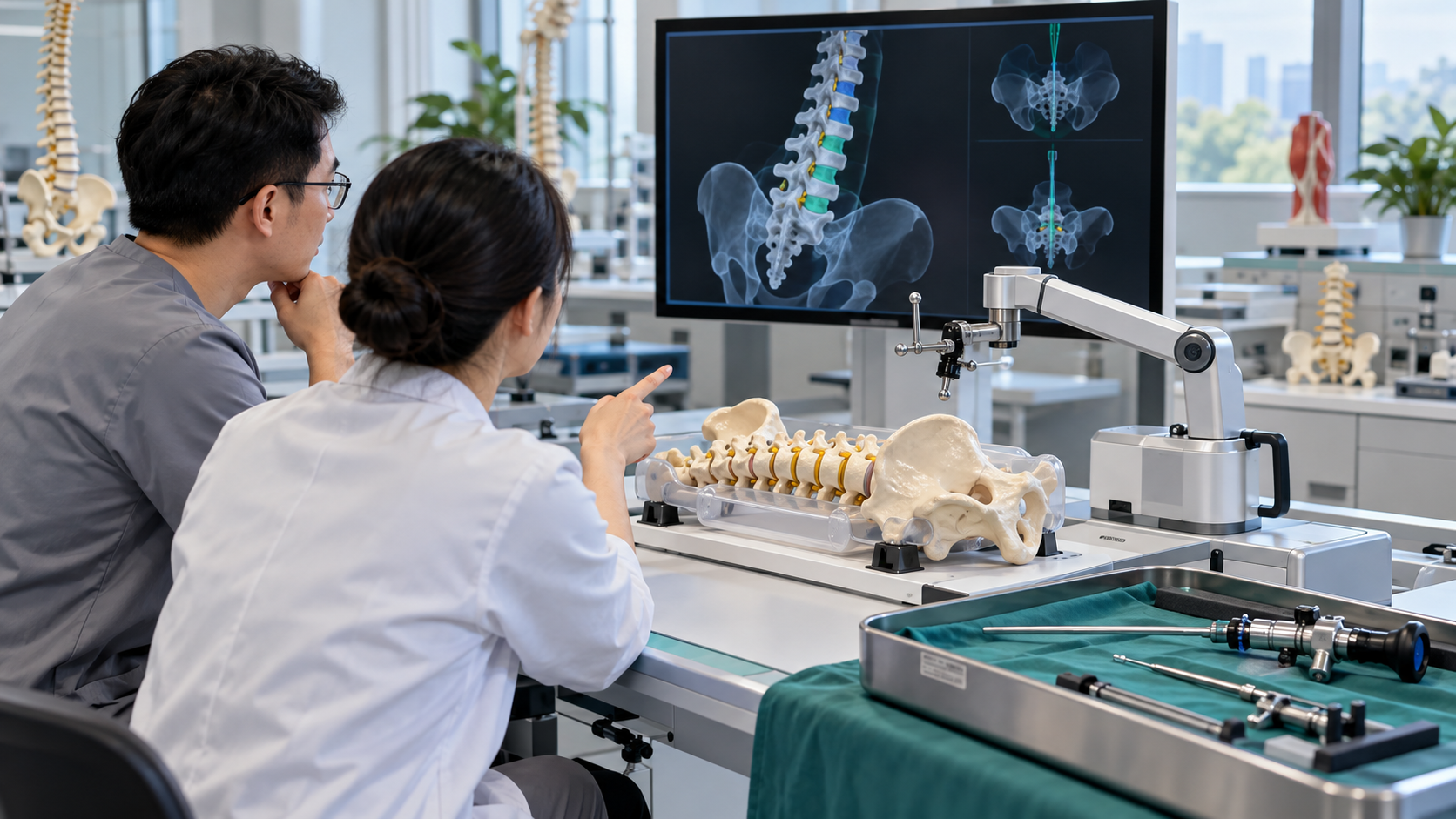
Not Every Company Needs to Become a Full-Stack Platform
One option is to become a procedure-focused company: build a product portfolio, clinical evidence, and a service system around a pathological problem that can sustain adoption, and establish repeat purchases and per-procedure contribution in a limited geographic area. This relates to the focus underlying Centinel and ATEC, but does not mean copying their products or market strategies.
Another option is to become a key technology partner: make imaging, powered tools, energy, materials, navigation interfaces, or specific instruments sufficiently reliable to serve multiple platforms through validated compatibility. Open collaboration can reduce internal development investment, but interface changes, quality responsibilities, data permissions, and maintenance fees should be agreed in advance. Complete dependence on a single partner for a key technology may also weaken bargaining power.
An open platform still needs its own profit model. If equipment is compatible with several implant manufacturers, its maker may earn revenue through equipment, maintenance, validated tools, software services, or technology licensing, but does not automatically capture all implant profit. Conversely, establishing a proprietary implant portfolio also brings responsibility for registration, manufacturing, inventory, and channels. Companies should first validate which value they can deliver and charge for, then decide their compatibility strategy, rather than expand several immature businesses at once simply to imitate a closed ecosystem.
A more complete platform is worth attempting only when a company already has sufficient case volumes, customer density, cash capacity, and cross-system engineering capabilities. The test of a platform is not whether its product catalog is complete, but whether combining its modules reduces workflow burdens, generates stable adoption, and earns a return on incremental investment. Management should specify which capabilities to build, which to access through partnerships, and which not to enter for now.
Truly valuable expansion into adjacent fields should reuse existing technology, clinical understanding, or channel service capabilities. If entering each category requires a new sales team, large numbers of additional instrument sets, and entirely new registration and after-sales systems, so-called platform development may simply mean putting several independent businesses into one set of financial statements. In that situation, partnership, licensing, or first deepening the core business may be more sensible.
Innovation does not only mean an entirely new implant. Fewer instrument changes, more stable imaging, better consumable consistency, and shorter preparation workflows can all create value. But that value needs to be measurable: engineering changes cannot be directly promoted as reducing complications or improving long-term efficacy. The closer a claim gets to clinical outcomes, the more it needs evidence of corresponding quality.
Whichever path is chosen, companies should build a procedure-level value dossier: target patients and indications, the existing treatment pathway, unresolved shortcomings, effects requiring validation, equipment and consumable lists, physician learning and service requirements, and full costs under future prices. Product managers need to understand not only registration certificates and sales volumes, but also why hospitals continue choosing the complete solution.
Give Curiosity Room and Set Thresholds for Major Investment
Curiosity usually begins with questions that cannot yet be written into a business plan. If all research is first judged against next quarter's profit, a company will eventually make only what is easiest to approve and easiest to sell through its existing channels. Conversely, allowing every idea to occupy funding indefinitely also harms innovations genuinely worth pursuing. Resolving this tension requires distinguishing exploration, development, and commercial scaling, rather than managing all R&D with the same sales-volume spreadsheet.
During exploration, physicians, engineers, materials specialists, and product staff should receive a stable small budget and dedicated time. They should be allowed to observe failed surgical workflows, investigate complaints, test principles, and record disproven hypotheses. Assessment should focus on whether credible new knowledge has been gained, not on the number of patents filed. Demonstrating early that a direction is not worth pursuing is also a valuable output.
Once formal development begins, each larger investment should address a key uncertainty that needs to be resolved: clinical need and the target population, core performance and risks, intellectual property and feasibility, the registration pathway, consistency in volume manufacturing, procurement prices, and unit economics. A milestone should not merely say that a prototype is complete; it should define which results justify continuing and which require a change of direction or a stop. Budgets should increase progressively with the evidence, and necessary clinical follow-up should not be arbitrarily interrupted because a quarter's figures are weak.
Intelligent-technology projects also need dedicated validation gates. Automated planning should be tested across different hospitals, equipment, and patient conditions, with clear exclusions, physician review, and the ability for physicians to take over at any time. Intraoperative systems must validate how they detect and safely disengage in situations such as registration failure, obstruction, and movement. Clinical studies should prespecify comparators, primary endpoints, and how learning curves will be addressed, rather than report only demonstrations by the most experienced teams. Real-world data can support iteration, but authorization, quality, privacy, and revalidation after updates all require a budget.
The commercial scaling phase should be stricter still: How many hospitals are actually using the new product consistently? Do physicians reorder after trials? Can the product contribute profit after training, repairs, trial-related losses, and on-site support are deducted? Installations without stable repeat purchasing should not immediately be labeled successes. Revenue generated only by distributors' initial stocking orders does not demonstrate market validation either.
Management can use two connected review cadences: exploration reviews allow clinical and engineering questions that do not yet have answers, while operating reviews rigorously examine unit contribution, inventory, collections, and cash consumption. The former must not become a reason to bypass budgets, and the latter should not use one quarter's sales to invalidate early-stage research.

Test Growth Against Per-Procedure Economics and Cash Tied Up in Operations
After volume-based procurement, operating efficiency is about more than slightly cheaper purchasing or a smaller headcount. Companies need to know how much net revenue excluding tax they actually receive for a compliant, reliable procedure, and how much they spend on manufacturing, logistics, clinical support, channel services, and instrument use. Distribution and delivery models should be restated on comparable bases of responsibility and expense, to avoid misjudging efficiency because channel revenue is recognized differently.
The following is only a hypothetical illustration of the mechanism. Prices are indexed and do not represent any company's actual quotations. Suppose net revenue per procedure falls from 100 to 80, manufacturing cost remains 30, and variable marketing and logistics costs remain 20. Unit contribution then falls from 50 to 30. To maintain the same total contribution, sales volume must rise by approximately 66.7%, not 20%. If manufacturing cost is simultaneously reduced to 27 and variable marketing cost to 17, unit contribution recovers to 36, but the required volume increase is still approximately 38.9%.
| Hypothetical Per-Procedure Basis | Original Scenario | Price Reduction Only | Price Reduction with Efficiency Gains |
|---|---|---|---|
| Company Net Revenue Index | 100 | 80 | 80 |
| Manufacturing Cost | 30 | 30 | 27 |
| Variable Service and Logistics Costs | 20 | 20 | 17 |
| Unit Contribution | 50 | 30 | 36 |
| Sales Volume Growth Required to Maintain Original Total Contribution | Baseline | 66.7% | 38.9% |
Calculation notes: unit contribution = net revenue - manufacturing cost - variable marketing and logistics costs; sales volume growth = original unit contribution / new unit contribution - 1. Fixed administrative costs, R&D, instrument-set depreciation, and financing costs are excluded. These figures therefore do not represent operating profit, break-even sales volume, or an actual market forecast; additional capacity and service personnel may also increase fixed costs.
Instrument sets and field inventory should be managed as assets that must earn a return. When sales staff request an instrument set, they should also specify expected procedure volumes, sharing and transfer arrangements, backup requirements, repair responsibilities, and recovery conditions. Operating reviews should examine not only installation counts but also actual utilization, annual contribution per instrument set, idle time, and loss or damage. SKU rationalization must preserve clinically necessary specifications and patient safety; essential models must not be removed to meet inventory targets.
Equipment Placement Must Account for Both Hospital Value and Company Returns
If a company provides equipment to hospitals and then recovers its investment through subsequent consumable sales, hospitals' initial expenditure may fall while the company's cash pressure rises. Each placement should have its own calculation of installation, training, maintenance, and recovery costs, along with actual compliant charges, sustainable case volumes, and associated-consumable contribution. It should not be approved simply on the grounds that it will drive sales.
An annual cash contribution statement can be established for a hospital cluster or individual site: cash collected for consumables and services, less the corresponding actual cash outlays for procurement and manufacturing, logistics, clinical support, maintenance, and training, then less additional cash investment in equipment and instruments. Changes in receivables and inventory should be tracked separately, without deducting them twice. For existing customers, count only contribution genuinely added or reasonably retained relative to a no-equipment-placement baseline, avoiding attribution of all existing consumable profit to the new equipment. This management model cannot replace statutory revenue recognition and asset depreciation.
Equipment proposals should, at a minimum, test investment recovery under low utilization, lower consumable prices in follow-on procurement, increased repairs, and delayed collections. Compliant arrangements for transfer, upgrade, or exit should apply when agreed usage conditions are not met. Any lease, pay-per-use, or bundled supply arrangement should be checked in advance against public hospital procurement, state-owned asset management, pricing, anti-commercial-bribery, and fair-competition requirements, and reviewed by the relevant professionals.
Manufacturing cost reductions should come from processes, yields, platform-based design, sound procurement, and production planning, not from lowering requirements for materials, sterilization, inspection, or traceability. Quality systems, post-market surveillance, and necessary clinical support are not expenses to be cut arbitrarily. Once a quality problem occurs, recalls, compensation, and loss of trust may far exceed any short-term savings.
A New Growth Trajectory Must Clear Both Utilization and Contribution-Margin Thresholds
An intelligent-surgery business can be broken down into equipment revenue, recurring revenue from tools and services, and genuinely incremental or reasonably retained implant contribution. Recognizing equipment sales may improve one period's financial statements without guaranteeing growth the following year; recurring revenue may also be insufficient because of charging constraints, free support, or consumable price reductions. When calculating the return on a placed unit of equipment, include equipment depreciation and fixed support, and examine these separately from shared company R&D, administrative, and channel costs.
The following assumptions illustrate sensitivity only; they are not market quotations, procurement proposals, or any company's forecast. Assume that tools and services contribute RMB 600 per case after direct variable costs. Fusion implants associated with the platform that are genuinely incremental or reasonably retained relative to not placing equipment contribute RMB 2,200 per case. Annual fixed costs per site are RMB 600,000, including equipment depreciation, maintenance, and fixed training support, but excluding headquarters R&D and administration, financing, and taxes and fees. The attachment rate is the proportion of all platform cases that meet the indications and generate the incremental implant contribution described above.
Scenarios for Covering Annual Fixed Costs at One Site; All Amounts Are Modeling Assumptions
| Operating Scenario | Incremental Implant Attachment Rate | Average Contribution per Case | Annual Cases Required to Cover Fixed Costs |
|---|---|---|---|
| Tools and Services Only | 0% | RMB 600 | 1,000 Cases |
| Lower Attachment Rate | 20% | RMB 1,040 | 577 Cases |
| Higher Attachment Rate | 60% | RMB 1,920 | 313 Cases |
| Higher Attachment Rate with a 20% Decline in Contribution | 60% | RMB 1,536 | 391 Cases |
The calculation is: annual cases required for coverage = 600,000 / average contribution per case, rounded up. A higher attachment rate must come from clinical suitability and genuine competitiveness, not unnecessary fusion or compulsory use. Local charges, procurement contracts, and actual costs all require separate validation.
These assumptions show that saying robots can drive consumable sales is not enough. If the attachment rate is low, even growth in procedures may fail to cover fixed investment; further declines in unit contribution from implants already subject to volume-based procurement will raise required case volumes again. Reaching the table's thresholds means only that a site's fixed costs are covered, not that the company is profitable, still less that its initial investment has been recovered in cash. The cash statement must still account for equipment purchases, inventory, receivables, and actual collections; depreciation must not be deducted again as a current-period cash outflow.
Turn Clinical Value into Sustainable Commercial Value
Hospital decisions increasingly need to balance clinical quality with the overall cost of treatment. Companies should answer the questions of physicians and hospital administrators alike: What shortcoming does the product address? What is the learning curve? What intraoperative support is needed? Can its effects on operative time, hospitalization, and reintervention be demonstrated? With equivalent safety and effectiveness, simpler preparation, better instrument turnover, and more reliable supply can all create sustainable differentiation.
Under DRG/DIP payment, approval and hospital access do not automatically bring additional payment. Version 3.0 continues and refines individual review of exceptional cases, with hospitals applying and eligible cases receiving support after review. This policy direction must not be presented as if all spine robots or innovative consumables have already obtained separate payment. Grouping, chargeable service items, payment standards, and effective dates need to be checked locally for each specific product.
The September 2026 pricing pre-establishment system for advanced new technologies and products allows eligible projects to apply, led by tertiary hospitals, before formal approval, so that pricing matters can be addressed in advance. Routine iterative products are outside its support scope. Pre-establishment is not formal authorization of a chargeable service item, nor does it mean health insurance reimbursement. The implication for companies is to bring forward the generation of clinical-value and economic evidence, not to relax profitability assumptions on this basis.
For robotics and intelligent assistance products, companies must separately verify whether hospitals can charge under the applicable service items, how patient payments interface with health insurance payment, and on what basis manufacturers can invoice hospitals or channels. Hospital revenue from assisted procedures is not the manufacturer's consumable revenue. National establishment of a service item also does not mean a uniform nationwide price or automatic reimbursement. Local implementation, whether required consumables are already included, and whether equipment records meet requirements all affect realizable revenue.
Data connectivity is therefore more than an R&D issue. The 2026 pricing policy for assisted procedures requires storage and uploading of relevant medical data and equipment operating records, and provides for reduced charges when data are missing. Companies need to provide hospitals with compliant, reliable data support while preserving necessary manual takeover and traceable records. Data interfaces can create service value, but hospital or patient data cannot be treated as assets manufacturers may possess or trade at will.
Clinical education should focus on indications, operating protocols, recognition of complications, and follow-up, not on expanding unnecessary treatment. When companies collaborate with physicians on research, they should clarify ethics, conflicts of interest, data ownership, and publication arrangements. An innovation premium sustained only by opaque promotional spending is difficult to maintain over the long term and should not be regarded as an operating advantage.
International expansion likewise cannot be treated as a shortcut around volume-based procurement. Overseas net selling prices must be assessed after deducting registration, local channel, training, after-sales, liability coverage, and instrument-placement costs. Payment terms, exchange rates, and trade policy affect the ultimate cash return. Double Medical's first-half overseas revenue declined slightly year on year, while Xishan disclosed substantial international revenue growth, showing that going overseas does not itself imply a single outcome. A more practical approach is to select a few markets with clear clinical needs, manageable access pathways, and verifiable partner capabilities, and to base expansion on actual repeat purchases and collections.
International expansion also requires a choice of entry mode. Building a complete sales organization directly, jointly developing with a local partner, and providing key technologies or licenses require different amounts of capital and organizational capability. When domestic contribution is not yet stable, overseas partnerships can reduce some upfront burdens, but cannot eliminate reviews of registration, intellectual property, product liability, or channel quality. Compare the net contribution and cash cycle of each route, rather than only end-customer list prices.
Acquisitions should address clearly defined capability gaps, not fill next year's revenue target. Before a transaction, companies should specify which teams must be retained, ownership of registration certificates and intellectual property, channel transferability, quality-system integration, subsequent cash investment, and exit conditions. Payment structures and valuations should align with milestones; synergies that remain unproven should not all be paid for upfront in cash.
Embed Both Objectives in the Operating Cadence
Consider the following model: over the next ninety days, finance and sales rebuild accurate contribution and cash statements for products, hospital clusters, and individual equipment sites. R&D, clinical, and product teams select one or two core procedures and specify exactly which step intelligent technology addresses, which existing solution serves as the comparator, and which capabilities will be built internally or through partnerships. Meanwhile, the operating team inventories equipment, instruments, field stock, and receivables, and sets utilization and collection thresholds for new placements.
Over the following twelve months, select a few hospital clusters to validate the complete business model. Intelligent-surgery projects should record each stage separately: installations, consistently active hospitals, paid cases, appropriate implant attachment, and actual collections, distinguishing trials from routine use and existing from new customers. Review patient outcomes, failures and conversions, support time per case, ongoing expenses, and net contribution in parallel, then decide whether to expand, adjust, or stop. Every expansion should withstand stress tests for price cuts, low utilization, and longer collection periods, rather than work only under an optimistic budget.
| Board Focus | Suggested Assessment Basis | Misjudgments to Avoid |
|---|---|---|
| Innovation Quality | Validation results for key clinical or engineering hypotheses; evidence and cash required for the next stage of projects under development | Equating patent and registration-certificate counts with value |
| New-Product Commercialization | Hospitals sustaining use and repeat purchases; new-product contribution after introduction and service costs | Equating initial channel stocking with long-term demand |
| Operating Profit | Core profit and loss bearing full R&D and administrative costs, reconciled to statutory financial statements | Using adjusted measures in place of actual costs |
| Capital Efficiency | Field inventory aging, instrument utilization, receivable terms and collections; operating cash and capital expenditure | Equating growth in installations and shipments with growth in cash |
| Quality and Compliance | Complaint trends, completeness of traceability, effectiveness of corrective actions, and compliance review | Improving short-term profit by suppressing quality costs |
Boards should ask in particular: Does revenue growth depend on continually adding equipment, or is consistent annual adoption at existing hospitals growing? Will service costs decline with accumulated experience, or does each additional hospital permanently require more on-site staff? If robots fail to generate the expected fusion-consumable revenue, can software, tools, and services stand on their own? These questions determine whether a company is building a sustainable business or continually committing more funds to support the previous round of placements.
These measures should be applied according to role. Early-stage researchers should not be burdened with short-term sales targets, while commercial teams should not be rewarded solely for shipment value. Cross-functional project leaders need to understand clinical outcomes, development timelines, and unit economics together. People who bring bad news early, reject unsupported hypotheses, and proactively recover resources from ineffective investments should be supported, not penalized for failing to tell a growth story.
Innovation Needs Patience; Companies Need the Ability to Fund Themselves
China's next generation of spine companies need not choose between being curious innovators and efficient operators. But achieving both requires two different disciplines: openness toward the unknown and honesty about resource commitments. Mature businesses should be accountable for current profitability, exploratory projects should respect evidence and budget boundaries, and management is responsible for allowing both to coexist over the long term.
Restructuring by global giants reminds us that scale and historical standing cannot substitute for sustained returns on capital. The growth of specialists shows that mature industries can still generate new clinical and operating value. In China, long-term demand for diagnosis and treatment coexists with real payment constraints. Gross-margin compression from volume-based procurement is genuine pressure, while import substitution and hospital access also offer opportunities. Outstanding companies neither downplay the pressure nor treat opportunity as automatic profit. They turn clinical value into reliable delivery and operating results that generate collectible cash.
Mako's success story shows that technology can reshape procedure selection and implant competition, and that this influence has already reached clinical practice in China. The operating performance of domestic robotics companies reminds us that a gap remains between growing adoption and profitability. What China's next generation of spine companies should learn is the ability to connect technology, clinical evidence, and recurring revenue, rather than copy equipment formats or closed models. Intelligent technology can begin with one critical tool or one reliable workflow. As long as it helps appropriate procedures be performed better and leaves a sustainable contribution at actual prices, it merits long-term investment.
Ultimately, the goal worth pursuing is not an exceptionally high growth rate in one year or an impressive valuation on one occasion. It is a company that can still make money today, still has questions worth researching tomorrow, and can keep turning those questions into better products.
Growth and Profitability Comparison of Global Examples
The common reporting period is the second quarter of 2026, with amounts in USD millions. Revenue and GAAP net income are on the companies' reported bases; negative figures indicate losses. Some amounts are rounded in line with company announcements. This comparison tests whether growth and profitability occur together; it is not a ranking of like-for-like businesses.
| Company | Revenue | Revenue Growth, YoY | GAAP Net Income | Key Comparability Notes |
|---|---|---|---|---|
| Globus | 789.6 | +5.9% | 151.6 | The group includes non-spine businesses; revenue growth excluding Nevro was approximately 9% |
| ATEC | 214.0 | +15% | -26.0 | Surgical revenue of USD 196 million; positive adjusted EBITDA |
| Orthofix | 210.9 | +3.8% | -15.8 | Includes therapeutic products and limb reconstruction; must not be treated as pure spinal implant revenue |
| SI-BONE | 56.0 | +15.2% | -4.1 | Sacroiliac and spinopelvic-related businesses; positive adjusted EBITDA |
| Carlsmed | 18.9 | +57% | -10.5 | Personalized spine platform; adjusted EBITDA remained negative |
Financial Comparison of Publicly Reporting Chinese Companies
The common reporting period is January to June 2026. Amounts are in RMB millions, rounded to one decimal place. Year-on-year change refers to operating revenue; cash flow is net cash from operating activities. Figures come from company interim reports, are generally unaudited, and cannot be directly annualized.
| Company and Stock Code | Operating Revenue | Revenue Growth, YoY | Net Profit Attributable to Shareholders of the Parent | Net Profit Attributable to Shareholders of the Parent Excluding Non-Recurring Items | Net Cash from Operating Activities |
|---|---|---|---|---|---|
| Double Medical 002901 | 1,339.9 | +10.69% | 353.3 | 278.6 | 275.6 |
| WEGO Orthopaedic 688161 | 704.4 | -4.93% | 132.2 | 125.9 | 140.4 |
| Kinetic Medical 300326 | 360.2 | -34.03% | 133.9 | 75.6 | 91.3 |
| Sanyou Medical 688085 | 274.0 | +9.71% | 27.8 | 14.2 | 8.0 |
| AND Science & Technology 920180 | 132.0 | -11.46% | 25.4 | 22.4 | 6.8 |
| Chunli Medical 688236 | 417.1 | -14.46% | 120.0 | 114.1 | 34.3 |
| Xishan Science & Technology 688576 | 119.6 | -22.87% | -25.5 | -28.9 | -52.0 |
| TINAVI 688277 | 105.3 | -16.00% | -70.1 | -97.3 | -133.6 |